

A common postnatal experience
Many women notice something unexpected when they try to return to running after having a baby: urine leakage during impact exercise such as running, jumping or skipping.
This can feel worrying or embarrassing, but it is very common after pregnancy and childbirth. The important thing to know is that while it is common, it is not something you simply have to live with.
Understanding why leakage happens can help guide the right recovery approach.
⸻
What Research Shows
Pregnancy and childbirth affect the pelvic floor
Pregnancy and vaginal birth place a significant load on the pelvic floor muscles and surrounding connective tissues.
Research consistently shows that pregnancy and childbirth can lead to:
● reduced pelvic floor muscle strength
● altered neuromuscular control
● changes in connective tissue support
● increased risk of stress urinary incontinence
Large systematic reviews suggest postpartum urinary leakage affects roughly 30–40% of women, particularly during activities that increase abdominal pressure, such as running or jumping.
⸻
Impact exercise increases pressure on the pelvic floor
Running is a high-impact activity. Each foot strike generates ground reaction forces that travel through the body and increase intra-abdominal pressure.
The pelvic floor must coordinate with the diaphragm, abdominal muscles and hip muscles to manage this pressure.
If that system is not yet functioning well after pregnancy, the bladder may leak during impact.
⸻
Time alone does not restore pelvic floor function
A common misconception is that women should simply wait six weeks or several months before returning to running.
However, research suggests recovery is not purely time-based.
Pelvic floor strength, coordination and load tolerance vary widely between individuals, meaning some women may return safely earlier while others need more rehabilitation.
Guidance from organisations such as Pelvic Obstetric and Gynaecological Physiotherapy emphasises that functional readiness matters more than time since birth.
⸻
What We Still Don’t Fully Know
Although we understand many risk factors for postnatal urinary leakage, research is still evolving in several areas.
For example:
● the exact load thresholds the pelvic floor can tolerate during running
● the optimal progression back to high-impact sport
● which exercise approaches best restore pelvic floor coordination.
Because of this, individualised assessment is often helpful.
⸻
Clinical Perspective (Physiotherapy)
In practice, leakage when running postpartum rarely has one single cause.
Instead it is usually influenced by a combination of factors such as:
● pelvic floor strength and endurance
● coordination between diaphragm, abdominals and pelvic floor
● breathing patterns
● hip and trunk strength
● overall load progression when returning to exercise.
This is why rehabilitation often focuses on whole-body function rather than isolated pelvic floor exercises alone.
Some rehabilitation frameworks used in postnatal care, including those taught in programmes such as the Core Exercise Solutions pre- and postpartum specialist training led by Sarah Duvall, emphasise the integration of pelvic floor function with breathing, core control and movement patterns.
⸻
Signs Your Body May Not Be Ready for Running Yet
Some symptoms can suggest your pelvic floor or load tolerance may need further rehabilitation before returning to high-impact exercise.
These include:
● leaking urine when running, coughing or jumping
● a feeling of pelvic heaviness or dragging
● pelvic or lower back pain during impact activity
● abdominal bulging or difficulty managing pressure during exertion.
These symptoms do not mean running is permanently off limits — but they often indicate that progressive rehabilitation may help first.
⸻
What Often Helps
Evidence-informed physiotherapy management typically includes:
Pelvic floor muscle training
Structured pelvic floor exercises remain a cornerstone of treatment and are supported by strong research evidence.
Load management and graded return to impact
Gradually reintroducing impact allows tissues to adapt to increasing forces.
Breathing and pressure management
Improving coordination between breathing, abdominal muscles and pelvic floor.
Hip and trunk strength
Strong gluteal and trunk muscles help distribute forces during running.
⸻
When to Consider Seeing a Pelvic Health Physiotherapist
It may be helpful to seek assessment if:
● leakage persists when exercising
● you feel pelvic heaviness or pressure
● you are unsure how to safely return to impact sport
● symptoms are affecting your confidence with exercise.
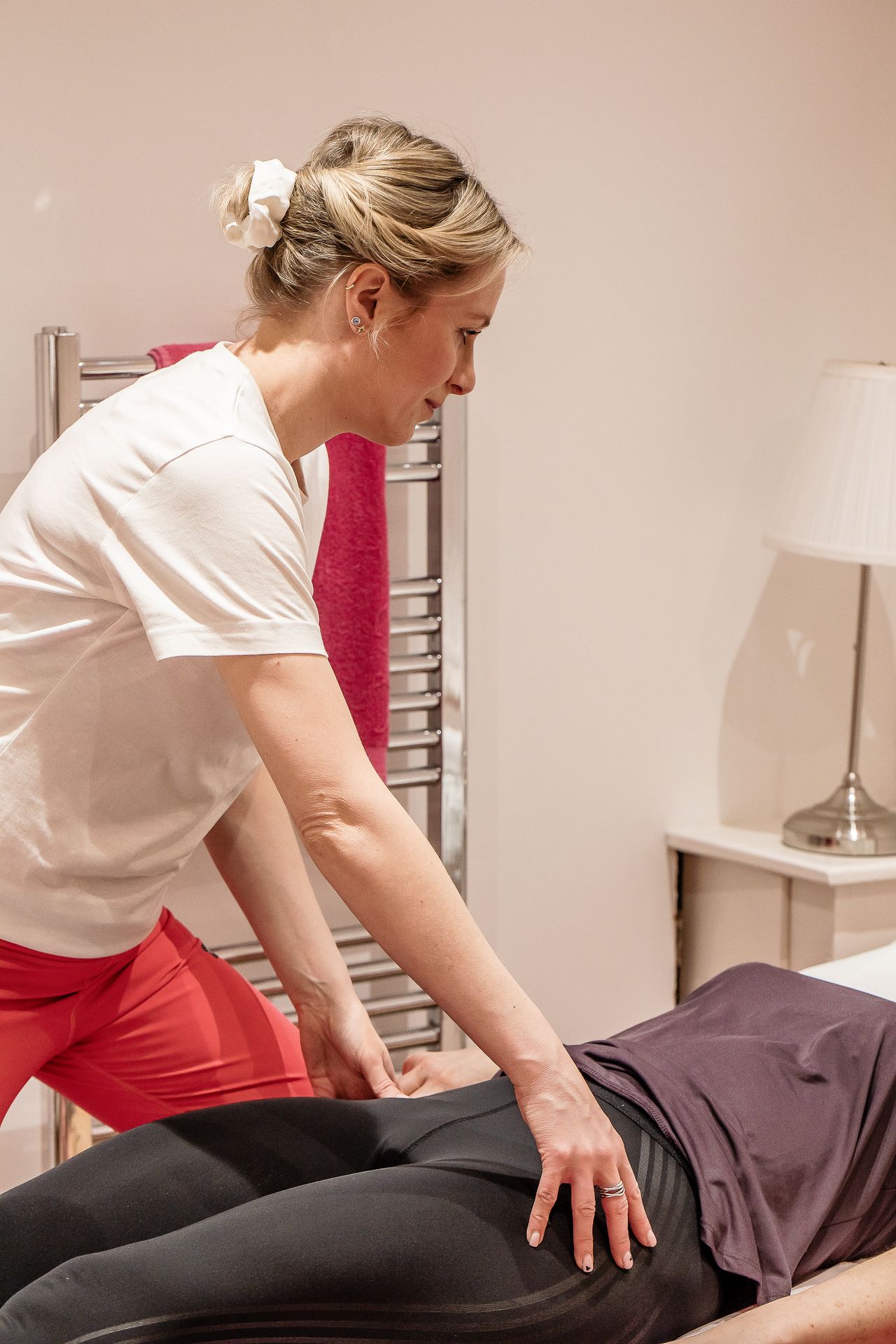
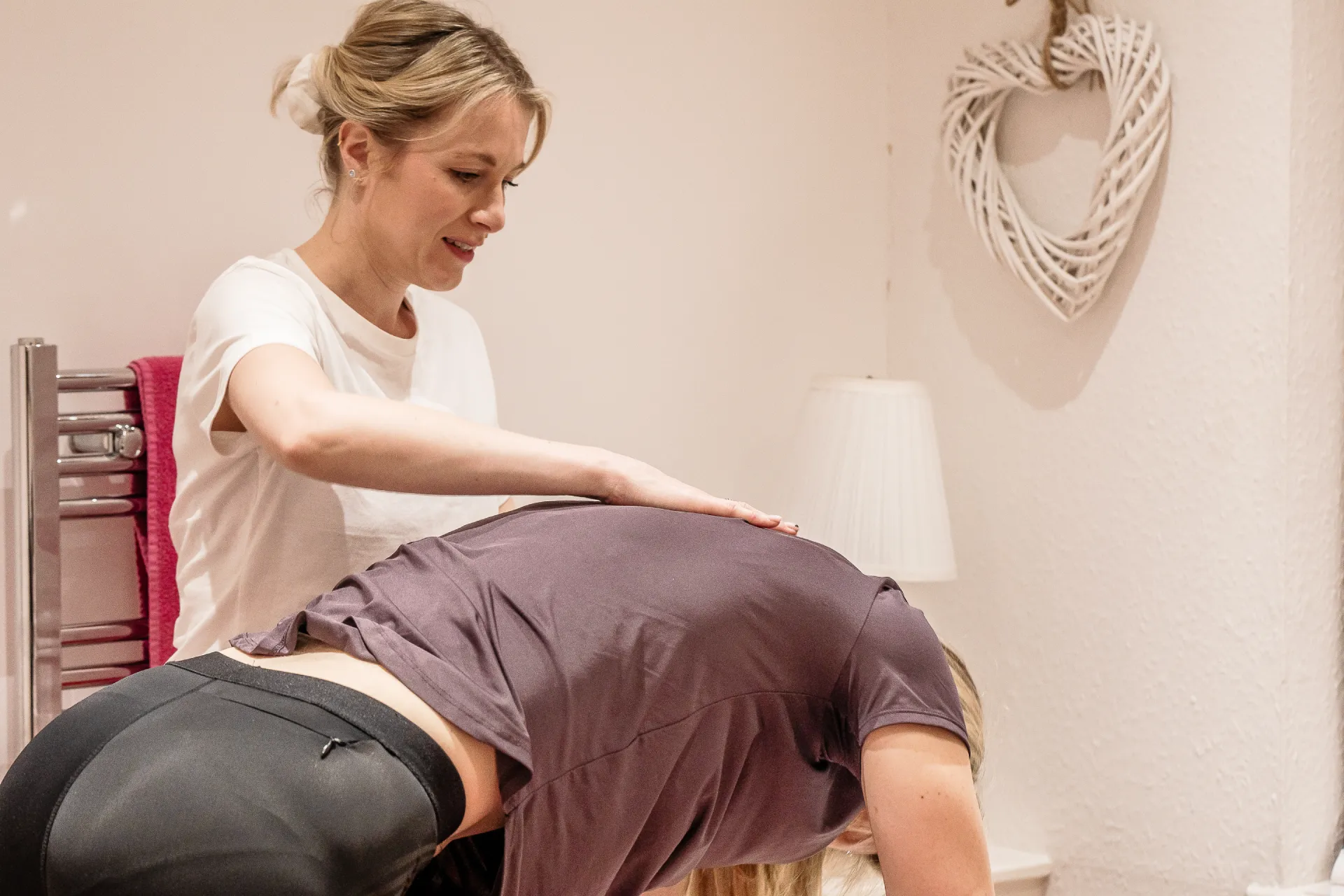
A pelvic health physiotherapist can assess pelvic floor function, strength, coordination and overall movement patterns to guide rehabilitation.
⸻
Key Takeaways
-
- Urine leakage when running after childbirth is common but treatable.
• Recovery after pregnancy is not purely time-based — functional readiness matters.
• Pelvic floor rehabilitation often involves whole-body coordination and gradual return to impact activity.
⸻
Evidence Summary
Research consistently supports pelvic floor muscle training as first-line treatment for stress urinary incontinence after childbirth. Guidance from organisations including Pelvic Obstetric and Gynaecological Physiotherapy emphasises assessment and graded return to impact exercise rather than purely time-based recommendations.
- Urine leakage when running after childbirth is common but treatable.
• Recovery after pregnancy is not purely time-based — functional readiness matters.
• Pelvic floor rehabilitation often involves whole-body coordination and gradual return to impact activity.