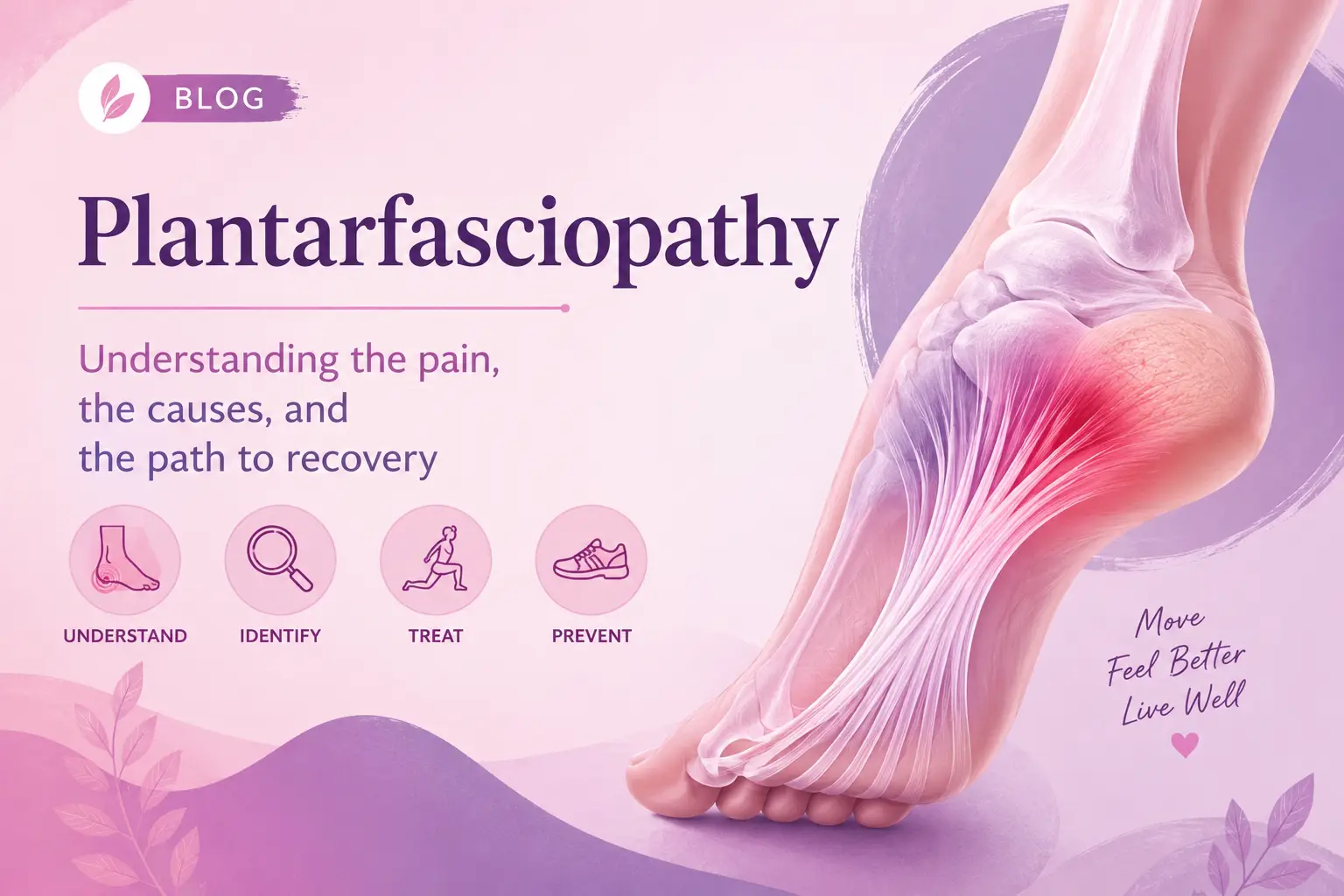


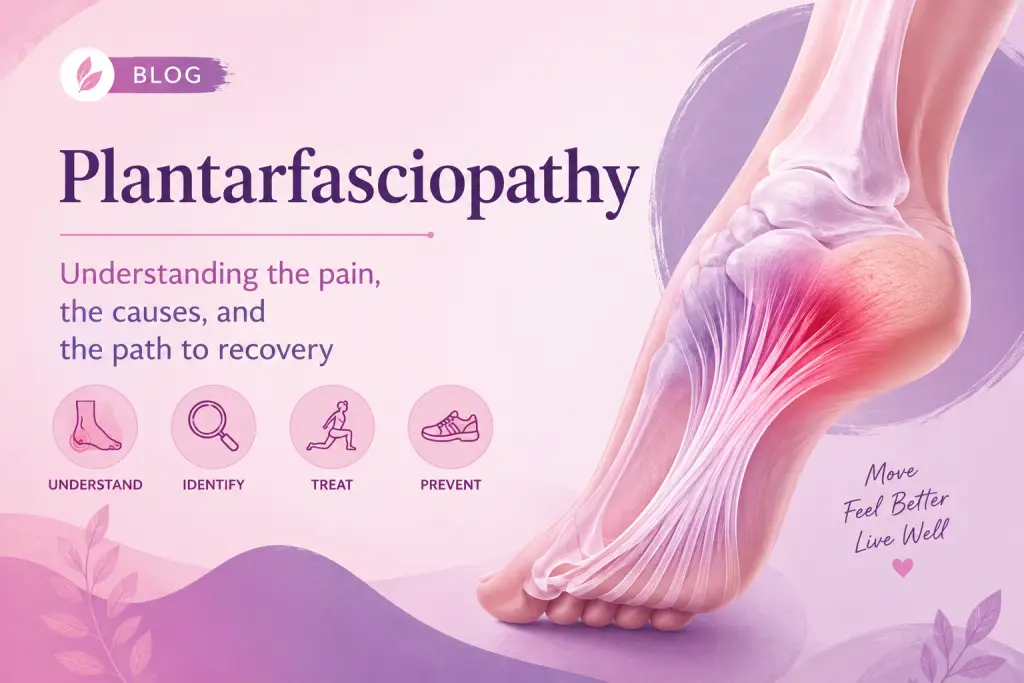
Understanding Heel Pain in Midlife Women
That sharp heel pain with your first steps in the morning — or after long sitting — is one of the most common musculoskeletal complaints in midlife women. It has a name (plantar fasciopathy), a physiological explanation, and effective treatment. It is not something you have to walk off for months.
Understanding the Menopause Connection Oestrogen influences connective tissue quality across the body, including the plantar fascia. As levels fall, tissue tolerance to load drops — the same daily walking, standing or gentle jogging that felt fine at 35 can flare heel pain at 50. Weight changes and reduced daily impact activity add to it. Loading — not stretching or rest alone — is the treatment with the strongest evidence.
Practical Steps for Recovery
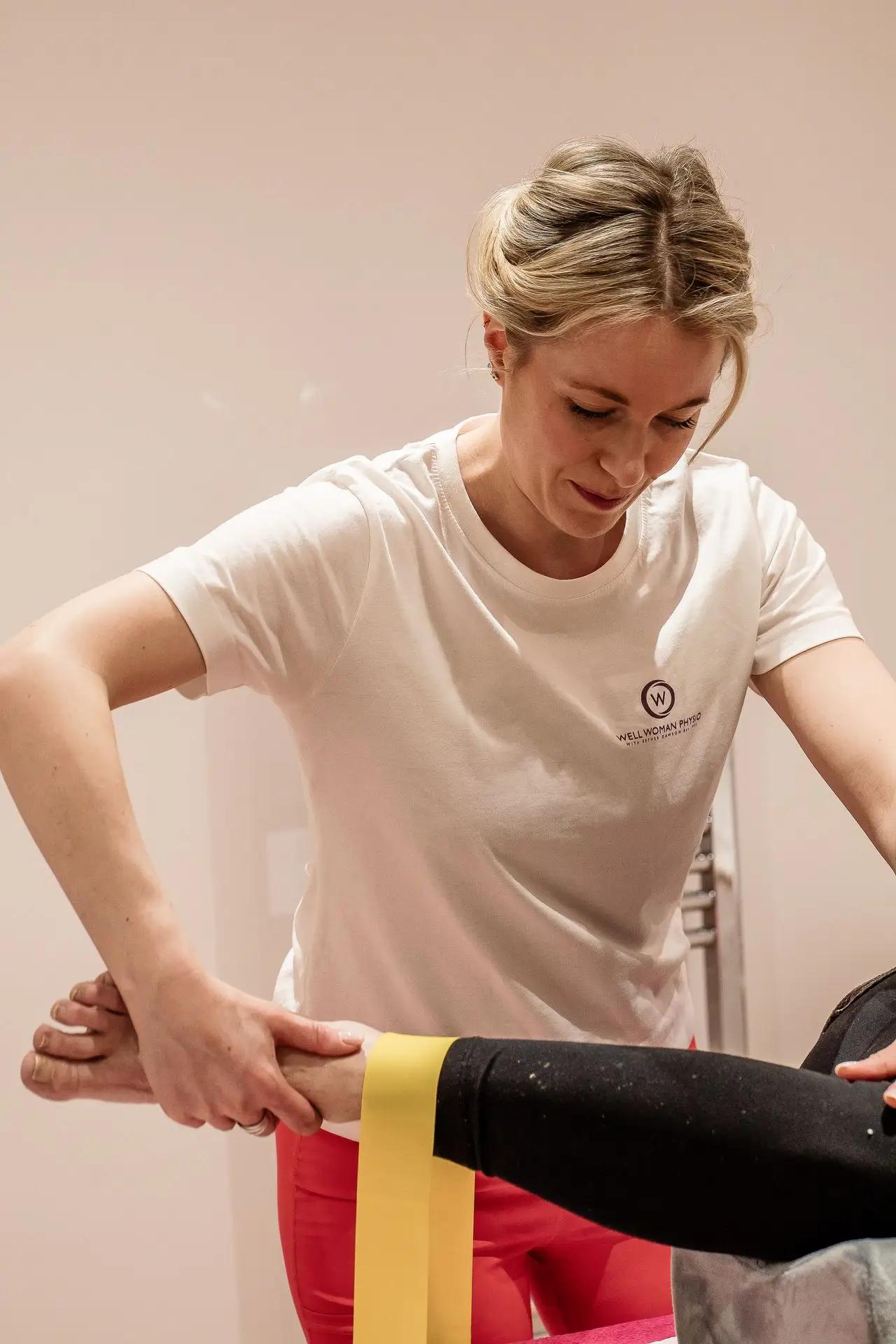
- Load the Tissue Progressively: Heavy slow calf raises with the toes elevated (Rathleff protocol) is the evidence-based cornerstone.
- Modify Aggravating Activity: Reduce volumes temporarily while capacity rebuilds — do not stop moving.
- Support the Foot: Supportive footwear during the acute period; orthotics can help symptoms but do not cure the tendon.
- Address the Wider Picture: Sleep, protein, activity level and HRT discussion (with your GP) all matter.
When to Seek Specialist Support Most people improve significantly within 12 weeks of structured loading, though full recovery can take 6 months or more. If heel pain has lasted more than two or three weeks, is affecting your daily activity, or is not responding to simple measures, a specialist assessment provides a clear diagnosis and a personalised loading plan.
Loading the tissue is what changes it — not resting it or stretching alone. Book a Musculoskeletal Assessment today for a diagnosis and structured plan.