
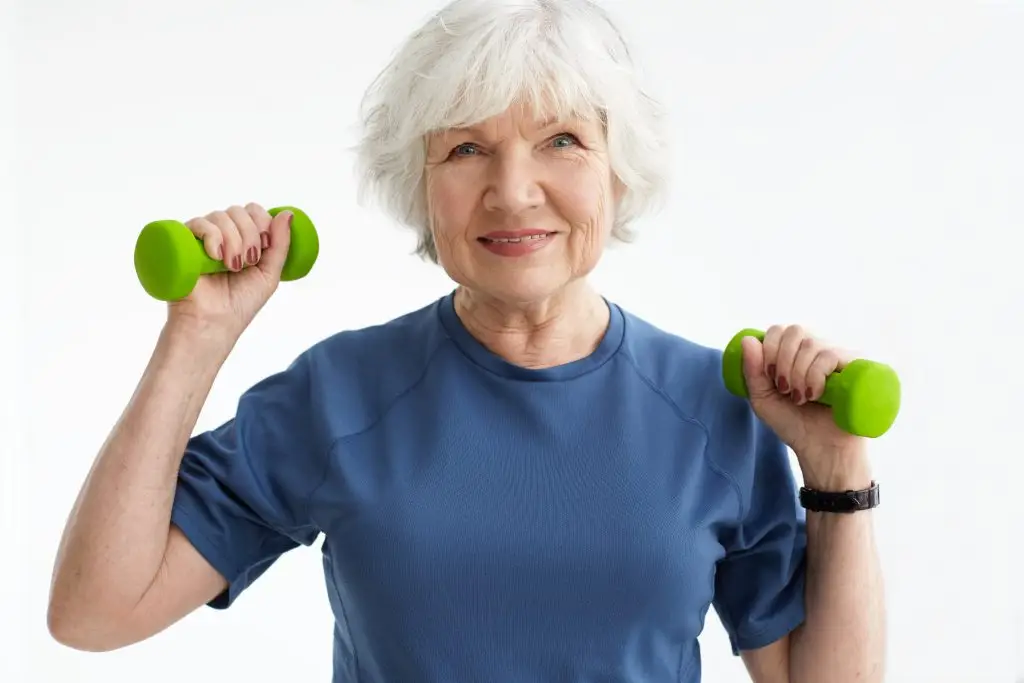
In my opinion, the menopause exercise message has become unnecessarily complicated.
If you spend any time online, you could be forgiven for thinking menopause requires an entirely new
rulebook for exercise. Lift heavy. Sprint. Do plyometrics. Avoid too much cardio. Walk after meals. Train for
your bones. Train for your heart. Do mobility. Prioritise recovery. And somehow fit all of it into a normal
week.
The useful message underneath the noise is much simpler: during and after menopause, exercise is one of
the most powerful things you can do for long-term health — but no single type of exercise does everything.
The goal isn’t to build the perfect “menopause workout”. It’s to include a mix of strength training, cardiovascular activity and exercise that challenges your bones—while choosing activities that fit your life and, importantly, that you enjoy doing!
Enjoyment matters. A routine you look forward to is much easier to keep going than one you feel you should do.
But different types of exercise offer different benefits. Your favourite activity may support some aspects of your health more than others, so it helps to understand what each brings—and where you might want to add something alongside it.
Let’s explore what your body needs, what you enjoy, and how the two can work together.
Why does exercise matter so much around menopause?
Menopause occurs at a time when several aspects of health can begin to shift. Oestrogen decline
contributes to accelerated bone loss. Ageing is associated with gradual loss of muscle mass and strength.
Cardiovascular and metabolic risk also becomes increasingly important through midlife.
Exercise cannot remove every effect of ageing or menopause, but it can influence many of the things we
care about: strength, physical function, bone health, cardiovascular fitness, body composition, balance,
confidence and independence.
A large meta-analysis of 101 studies involving 5,697 postmenopausal women found exercise training
improved muscle-related measures and reduced several measures of body fat. Resistance and combined
training were particularly useful for muscle outcomes, while aerobic and combined training produced greater
benefits for fat-mass outcomes.
That is an important clue: different forms of exercise provide different adaptations.
Strength Training: building strength for everyday life
Research supports resistance exercise for muscle strength and function after menopause. A 2026 systematic review in postmenopausal women with sarcopenia (reduced muscle mass) found structured exercise improved skeletal muscle mass, grip and knee-extension strength, gait speed and other measures of physical function.
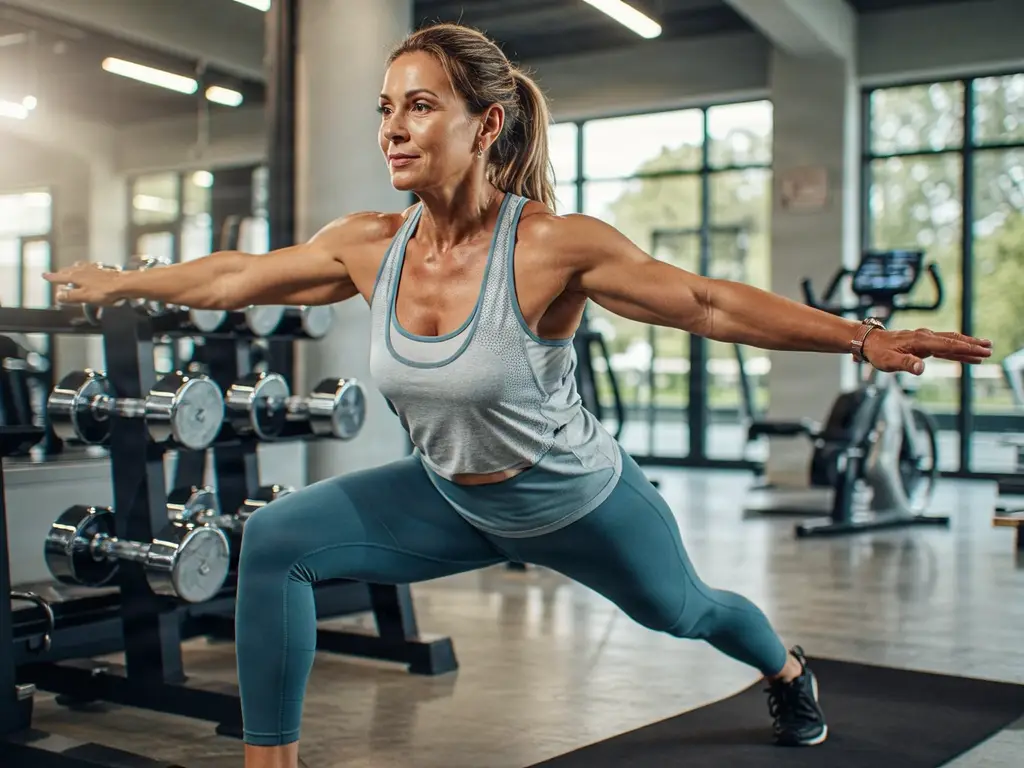
Resistance training is one of the most useful additions to a midlife exercise programme. It can involve free weights, machines, resistance bands, body-weight exercises or a mixture of these.
The important principle is progressive overload: the exercise needs to become more challenging as your body adapts. I see lots of women who are exercising regulalry….but not many of them are following this principle. I ask them..are you making it progresively harder?? That might mean increasing the weight, repetitions, sets, range, complexity or difficulty of the movement.
Do I have to lift heavy?
You need sufficient resistance to challenge your muscles. That is not the same as saying every menopausal
woman must lift extremely heavy weights.
A 2025 review of resistance-training studies in postmenopausal women found considerable variation
between programmes. Many used conventional strength-training principles, commonly around three sets of
eight to ten repetitions, but there is no unique evidence-based menopause prescription that applies to
everyone.
If ten repetitions feel easy and you could comfortably do another fifteen, the exercise is probably not
providing much strength stimulus. If your technique deteriorates immediately or the load repeatedly causes
a large symptom flare, it may be too much for where you are now.
‘Heavy’ is relative. Progressive is the more useful word.
Cardiovascular exercise: your heart still matters
Strength training has rightly gained attention in menopause care, but it should not push cardiovascular
exercise out of the picture.
Brisk walking, running, cycling, swimming, dancing, rowing and many sports can all contribute to
cardiovascular fitness. UK physical-activity guidance for adults recommends at least 150 minutes of
moderate-intensity activity a week, or 75 minutes of vigorous activity, or an equivalent combination,
alongside strengthening activity on at least two days.
You do not need to perform all of that as formal workouts. Walking to work, cycling, active commuting,
gardening, sport and shorter bouts of purposeful activity can all contribute.
If you enjoy running, you do not need to stop because you are menopausal. If you hate running, you do not
need to start simply because someone online says you should sprint.
Bone loading: walking is good, but it is not the whole answer
Bone responds to mechanical loading. Because bone loss accelerates around menopause, exercise that
challenges the skeleton becomes particularly relevant.
Resistance training can support bone mineral density. A 2025 meta-analysis of 17 randomised controlled
trials found resistance training improved bone mineral density at the lumbar spine, femoral neck and total
hip in postmenopausal women. Higher-intensity training showed benefits at some hip sites, although there
was substantial variation between studies.
A 2026 systematic review and meta-analysis has also reinforced the potential value of high-intensity, impact
and strength training for bone mineral density in women.
Walking has many health benefits, but bone adapts particularly to loads that are greater or different from its
usual experience. Depending on your health, fracture risk and experience, that might include resistance
training, stair climbing, hopping, jumping, running or other impact-based activity.
What if I have osteoporosis or low bone density?
Exercise remains important, but the programme may need to be individualised. A person with osteoporosis
and previous vertebral fractures needs a different starting point from a healthy woman in her 40s who has
exercised for years.
This is where blanket social-media instructions to ‘jump more’ or ‘lift as heavy as possible’ become
unhelpful. Bone needs load, but load should match the person in front of us.
If you have osteoporosis, previous fragility fractures, significant balance problems or uncertainty about safe
loading, seek individual advice rather than avoiding exercise altogether. The Royal Osteoperosis Society is a great place to look for more advice.
Impact and Power: useful qualities we often forget
Strength is important, but the ability to produce force quickly — power — also matters as we age. Getting up
quickly, catching yourself when you trip, climbing stairs confidently and responding to an unexpected loss of
balance all involve more than slow strength alone.
Impact exercise can also provide a useful bone stimulus where appropriate. It does not have to begin with
box jumps. For one person, an appropriate progression may start with faster sit-to-stands, step-ups or brisk
stair climbing. For another it might include skipping, hopping, jumping or running.
The right dose depends on your starting point, symptoms, pelvic-floor function, bone health and previous
exercise experience.
Balance: not glamorous, but increasingly valuable
Balance tends to receive less attention than strength or cardio until someone begins to struggle with it. It is
worth training before that point.
Single-leg tasks, yoga, Tai Chi, multidirectional stepping and exercises that challenge stability can all
contribute. Strength and power training also support the physical capacity needed to recover from a
stumble.
Balance work does not need to occupy an entire gym session. It can be woven into a warm-up, strength
programme or everyday routine.
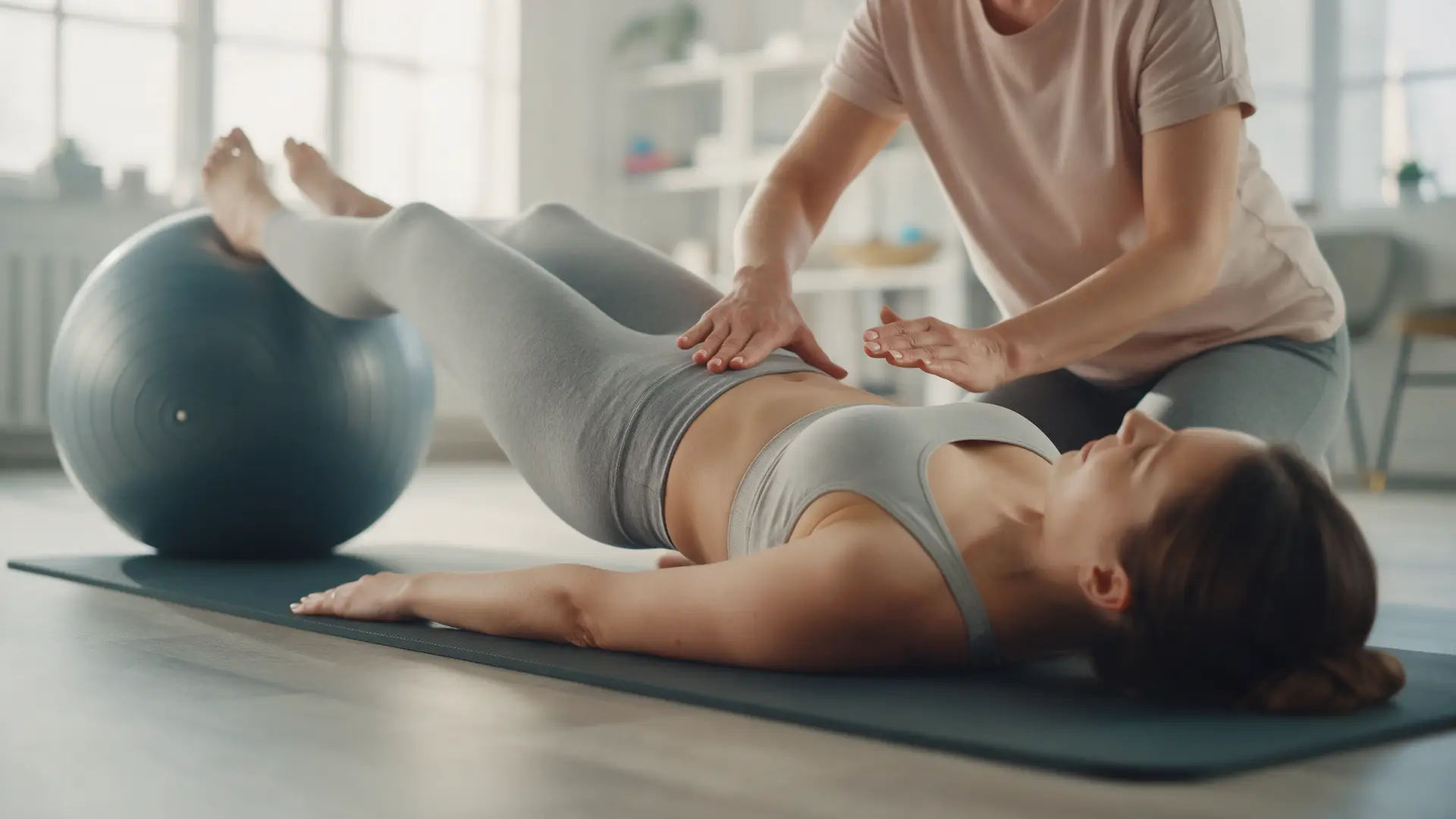
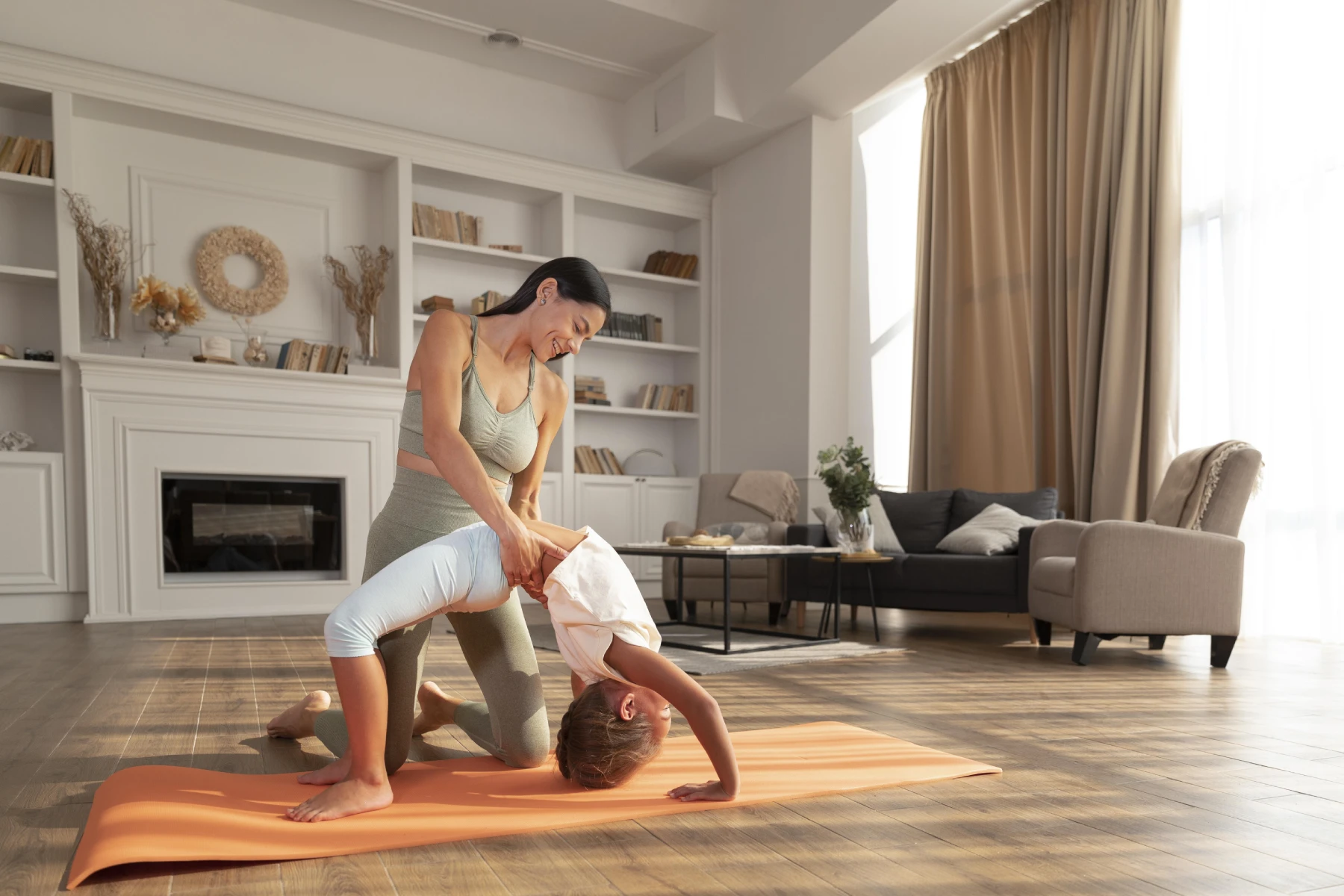
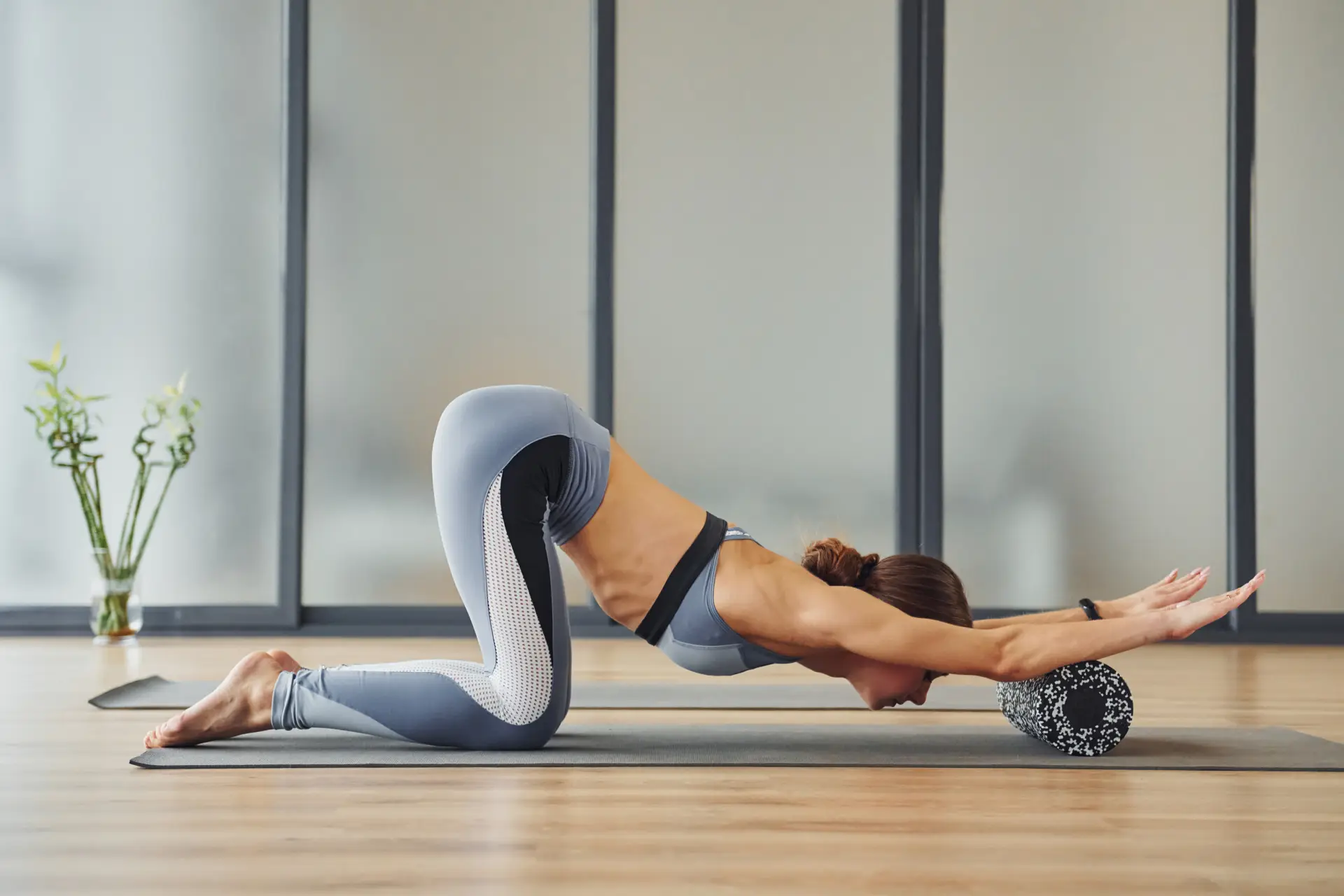
What about yoga and Pilates?
Yoga and Pilates can be excellent forms of movement. They may support mobility, balance, body
awareness, strength in certain ranges, relaxation and enjoyment.
The question is not whether they ‘count’. They do. The more useful question is whether your overall week
also provides enough stimulus for the health outcome you are trying to influence.
If yoga is your favourite activity, keep doing it. You may simply benefit from adding some progressive
resistance training and cardiovascular work rather than replacing something you enjoy.
Is HIIT essential in menopause?
No. High-intensity interval training can be an efficient way to improve fitness and some women enjoy it. It is
not compulsory menopause medicine.
Vigorous exercise can form part of your weekly cardiovascular activity, but you can build excellent health
and fitness without structuring sessions as HIIT. Your preferences, health, training history, recovery and
goals matter.
A programme you consistently complete is more useful than an allegedly optimal programme that makes
you dread exercising.
What if I have pelvic-floor symptoms?
Urinary leakage, prolapse symptoms or pelvic heaviness do not automatically mean you should avoid
strength training, running or impact exercise.
They may mean that the starting dose, technique, breathing strategy, exercise choice or progression needs
adapting while pelvic-floor capacity is addressed. A pelvic-health physiotherapy assessment can help
identify whether strength, coordination, relaxation, internal support (pessary) or external support, or other strategies could make exercise more comfortable.
The goal should usually be to help you participate in meaningful activity, not simply give you a longer list of
things to avoid.
What if my joints or tendons hurt?
Midlife aches are common, but pain does not automatically mean exercise is damaging you. Equally,
repeatedly provoking a severe or prolonged flare is not necessary for progress.
If an Achilles tendon dislikes running, a hip becomes painful after long walks or a shoulder objects to
pressing overhead, the first step may be to alter the dose rather than remove movement entirely. Reduce
load, volume, range, speed or impact temporarily, then rebuild capacity progressively.
Persistent or worsening symptoms still deserve proper assessment. Menopause can be part of the context
without being the diagnosis for every painful body part.
My clinical perspective
I think the current menopause conversation has done something useful: it has encouraged women to value
strength, muscle and bone health rather than seeing exercise only as a way to burn calories.
But we risk replacing one narrow message with another. Women do not need to be frightened into lifting
heavy, sprinting or jumping because menopause has suddenly made their previous exercise worthless.
Think instead about two things: what does your body need, and what do you enjoy enough to keep doing?
If you love walking, keep walking — and consider adding strength. If you love lifting, keep lifting — and
remember your cardiovascular health. If you love yoga, keep your yoga — and add whatever is missing
around it.
Key Takeaways
- There is no single ‘best’ menopause workout.
- Strength training is important for muscle, function and bone health, but ‘heavy’ is relative, and progression matters more than a universal weight prescription.
- Cardiovascular exercise remains important; strength training does not replace it.
- Walking is valuable but may not provide all the stimulus needed for muscle and bone.
- Impact and power training can be useful where appropriate, but should match your starting point and health.
- Yoga and Pilates count as exercise; they may simply need complementing with other training qualities.
- HIIT is an option, not a requirement.
- The best long-term programme combines what your body needs with movement you genuinely enjoy and can sustain.
Key References
NICE. Menopause: identification and management. NICE guideline NG23. Updated November 2024 and
April 2026.
Islam J, Dixon CR, O’Rourke M, Räisänen AM. Characteristics of Resistance Training Programs Targeting
Improvements in Health Outcomes in Postmenopausal Women: A Scoping Review. J Strength Cond Res.
2025;39(7):815–822. PMID: 40440557.
Zhao F, Su W, Sun Y, et al. Optimal resistance training parameters for improving bone mineral density in
postmenopausal women: a systematic review and meta-analysis. J Orthop Surg Res. 2025;20(1):523.
PMID: 40420105.
Jones E, Starrs P, Hunter B. A systematic review and meta-analysis of the effects of high-intensity, impact,
and strength training on bone mineral density in premenopausal and postmenopausal women. Menopause.
Published online 11 August 2026. PMID: 42578477.
Effectiveness of exercise intervention on muscle mass, muscle strength, and physical function among
postmenopausal women with sarcopenia: a systematic review and meta-analysis. 2026. PMID: 42245341.
The effects of exercise training on body composition in postmenopausal women: a systematic review and
meta-analysis. 2023. PMID: 37388207.
UK Chief Medical Officers. UK Chief Medical Officers’ Physical Activity Guidelines. Department of Health
and Social Care. 2019.
British Menopause Society. Principles and Practice of Menopause Care Resources Toolkit. Current
resource accessed September 2026.
Clinical note
This article provides general education rather than individual exercise or medical advice. If you have
osteoporosis, previous fragility fractures, significant cardiovascular disease, new or progressive
musculoskeletal symptoms, or symptoms that substantially limit exercise, an individual assessment can help
establish an appropriate starting point.