
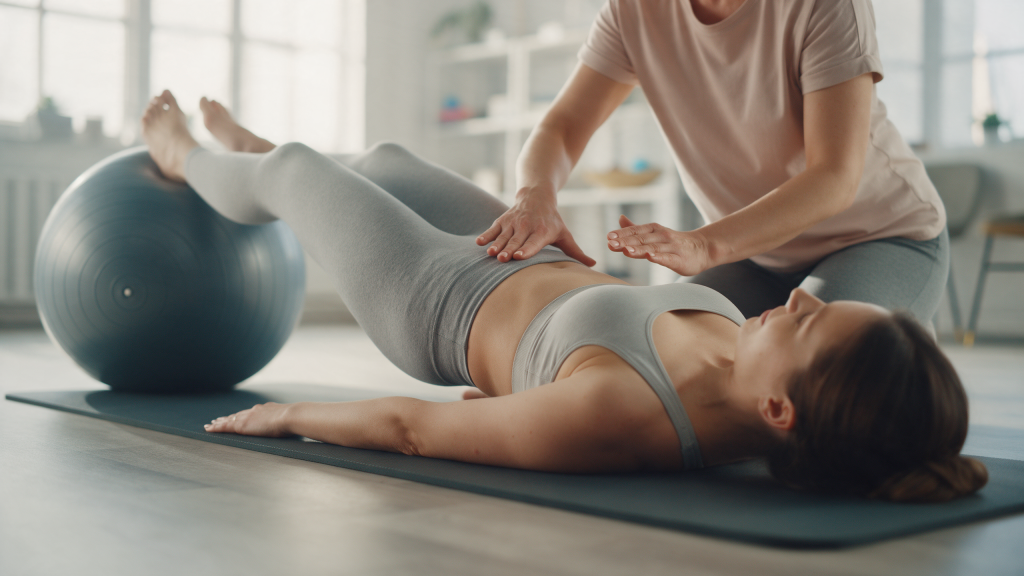
What is Diastasis Recti?
Diastasis recti (DRA) is a widening of the linea alba, the connective tissue running between the two rectus
abdominis muscles. This widening occurs in all pregnancies, and allows the abdominal wall to adapt as pregnancy progresses.
After childbirth, the abdominal wall changes again. Some narrowing happens naturally, especially early on in the first 3-6months but recovery time varies.
What does a tummy gap look or feel like?
You may notice a midline gap, softness, or a ridge or ‘doming’ when sitting up or lifting. Some women notice no
symptoms at all. A visible dome does not, on its own, mean you are damaging your abdomen.
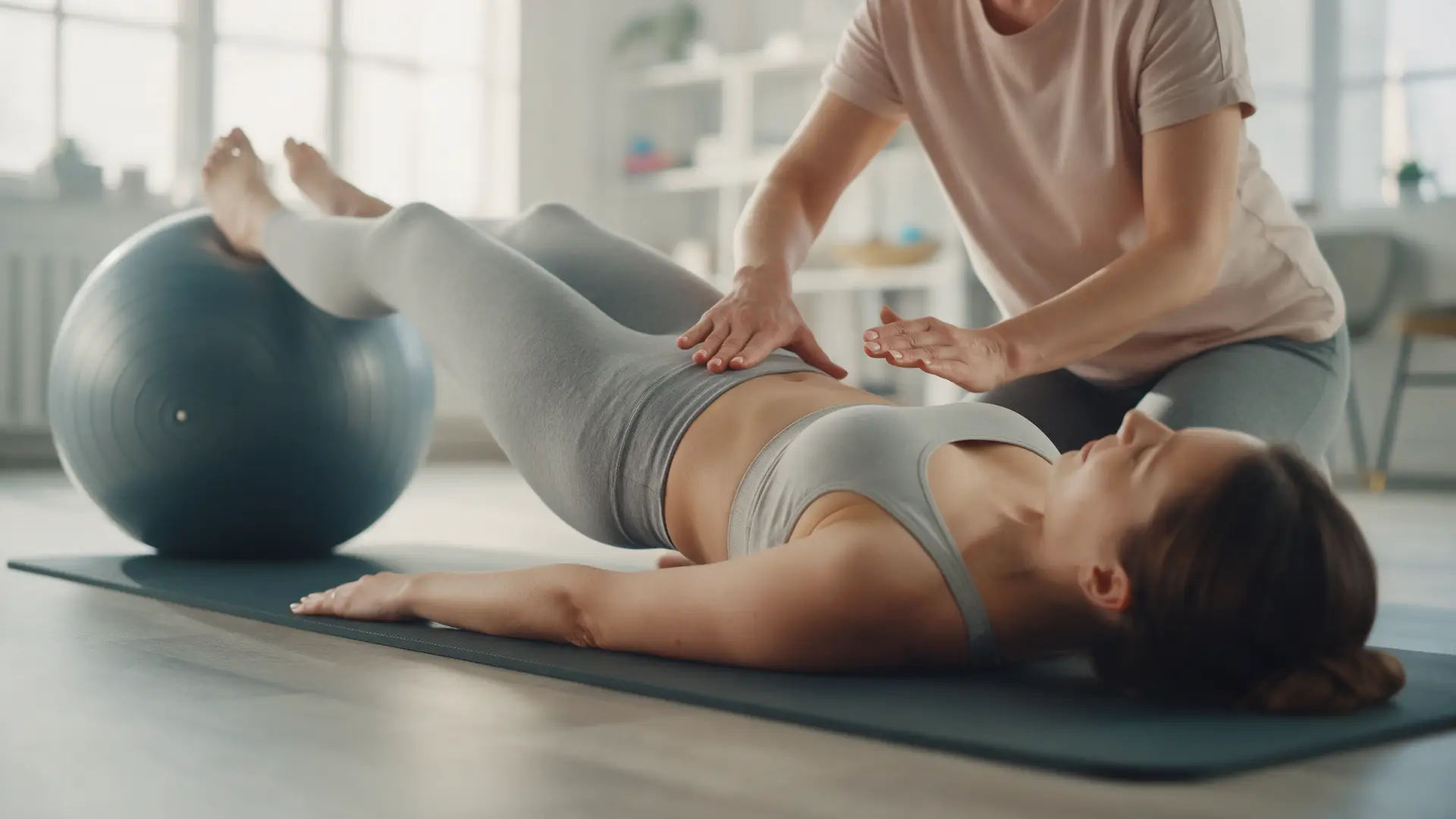
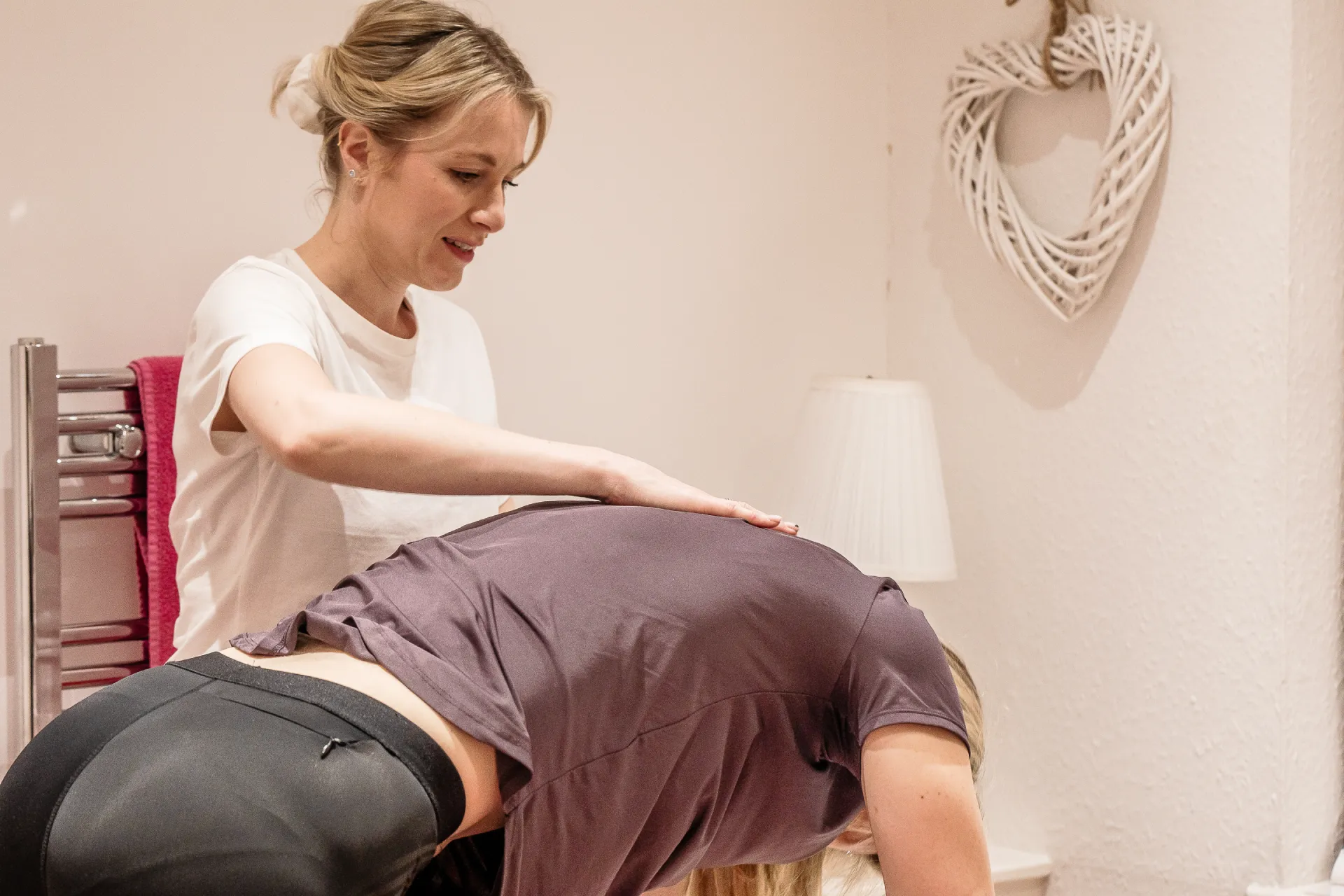
Clinicians may assess inter-recti distance, tissue behaviour under load, abdominal strength and functional tasks.
Does diastasis recti cause back pain or pelvic-floor problems?
These symptoms can coexist, but the evidence does not establish a simple causal relationship between the
width of the gap and back pain, urinary leakage or prolapse. Treating the gap measurement as the sole problem
risks missing other contributors.
If you experience pain, leakage, heaviness or functional difficulty, those symptoms deserve their own
assessment.
What does the latest research say?
A 2025 systematic review of postpartum exercise and pelvic-floor outcomes found low-certainty evidence that
abdominal muscle training reduces inter-recti distance. It did not establish that narrowing the gap necessarily
improves pain or function.
A 2026 meta-analysis of nine randomised trials (450 participants) found structured exercise reduced inter-recti
distance by approximately 8 mm on average versus control, but analysis of disability outcomes did not show a
clear improvement. Study programmes and measurement methods varied. The goal should therefore be useful
function and confidence, not a particular number of centimetres.
What are the best exercises for diastasis recti?
There is no proven single best exercise. Start with activities that fit your recovery and gradually increase the
challenge. Depending on your symptoms and birth recovery, this might include breathing with gentle
abdominal movement, heel slides, dead bug variations, bridges, sit-to-stands, squats and loaded carries.
Practise breathing normally while you move. You do not have to draw your tummy in throughout the day or
keep your pelvic floor contracted during every task.
Increase repetitions, resistance, range or complexity as you become more comfortable. Some bulging during
exertion can be normal; if a movement causes pain, significant pressure symptoms or loss of control, adjust the
exercise rather than banning it forever.
Are Sit-Ups, Front Planks, Side Planks and Lifting Weights Safe With Diastasis Recti?
If you’ve been told to avoid sit-ups, planks or lifting weights because you have diastasis recti (DRA), you might be surprised to learn that these exercises can all have a place in your recovery.
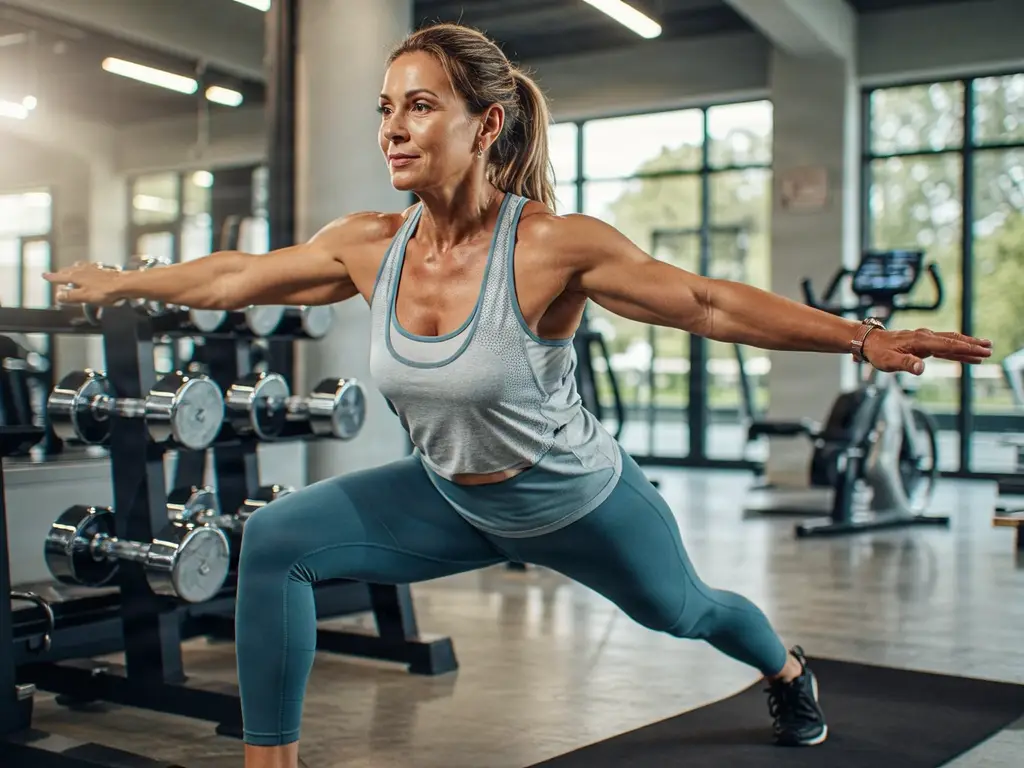
Your abdominal muscles are designed to work in different directions, helping you bend, twist, reach, lift and stabilise your body. Training across different planes of movement is an important part of rebuilding strength and preparing your body for everyday life, exercise and sport.
Why Different Exercises Matter
Your abdominal muscles don’t all work in exactly the same way. Different movements place different demands on them, which is why a varied exercise programme can be more useful than repeatedly practising just one type of abdominal exercise.
- Sit-ups and curl-ups – bending forwards (sagittal plane): These exercises challenge your rectus abdominis, the muscles running down the front of your tummy. They help develop strength for movements involving spinal flexion, such as curling forwards or getting up from lying down.
- Front planks – resisting extension (sagittal plane): Unlike sit-ups, front planks don’t involve repeatedly bending your spine. Instead, your abdominal muscles work to maintain your trunk position against gravity. This develops strength and endurance while resisting movement.
- Side planks – resisting side-bending (frontal plane): Side planks place greater demands on your lateral trunk muscles, particularly the obliques and quadratus lumborum. These muscles help control side-to-side movement and support activities such as carrying shopping, walking and balancing on one leg.
- Twisting movements – rotation (transverse plane): Rotational exercises challenge the oblique muscles and help prepare your body for activities involving turning, reaching and changing direction.
- Lifting weights – working across multiple planes: Squats, deadlifts, presses and carrying exercises recruit your abdominal muscles alongside your back, hips and legs. They help develop the strength and coordination needed for everyday tasks and more demanding physical activities.
Although we’ve described these movements separately, your abdominal muscles work together during most exercises. The aim isn’t to isolate one muscle perfectly, but to build strength and confidence across a range of movements.
But Won’t Sit-Ups Make My Abdominal Separation Worse?
This is a common concern, particularly following pregnancy.
Interestingly, research challenges the longstanding advice to avoid exercises that directly challenge the rectus abdominis.
A 2023 randomised controlled trial involving 70 postpartum women with DRA investigated a 12-week abdominal exercise programme that included head lifts, curl-ups and twisting curl-ups.
The researchers found improvements in abdominal strength without an increase in inter-recti distance compared with the control group.
This is encouraging because it shows that exercises involving spinal flexion can form part of a progressive DRA rehabilitation programme.
It doesn’t mean everyone needs to begin with full sit-ups, particularly in the early weeks after birth. Instead, the exercise should match your current strength, symptoms and stage of recovery.
What About Doming or Coning?
You may notice your tummy forming a ridge or dome along the midline during certain exercises.
This is a visible change in how the abdominal wall responds to load. It doesn’t automatically tell us whether an exercise is appropriate or inappropriate.
Rather than focusing entirely on how your tummy looks, consider how the movement feels, whether you can perform it comfortably and whether the challenge is appropriate for your current capacity.
Sometimes adjusting the exercise, reducing the load or changing your breathing can help you progress more comfortably.
Building Strength in All Directions
Think about everything your body does throughout the day.
You bend forwards to pick something up, twist to reach into the back of the car, carry a child on one hip, push a heavy door and lift shopping bags.
These activities challenge your abdominal muscles in different ways.
That’s why rehabilitation should gradually include flexion, extension control, side-bending control, rotation and progressive resistance exercises, rather than focusing on just one movement or avoiding particular exercises indefinitely.
If you’re recovering from a caesarean birth, your progression should also consider surgical healing, comfort and any postoperative guidance.
The key takeaway: Having diastasis recti doesn’t mean you need to avoid sit-ups, planks or weights. Your abdominal muscles are designed to manage movement and load in different directions. The goal is to progressively build the strength, function and confidence to return to the activities you enjoy.
Does a support belt or surgery help?
A support garment may feel comfortable in the early postpartum period, but it is not a substitute for
progressively restoring physical capacity and there is limited evidence that it permanently corrects the gap.
Surgery is not routine treatment. It may be considered in selected cases with persistent significant symptoms,
functional concerns or a coexisting hernia, following specialist assessment.
When should I see a physiotherapist or GP?
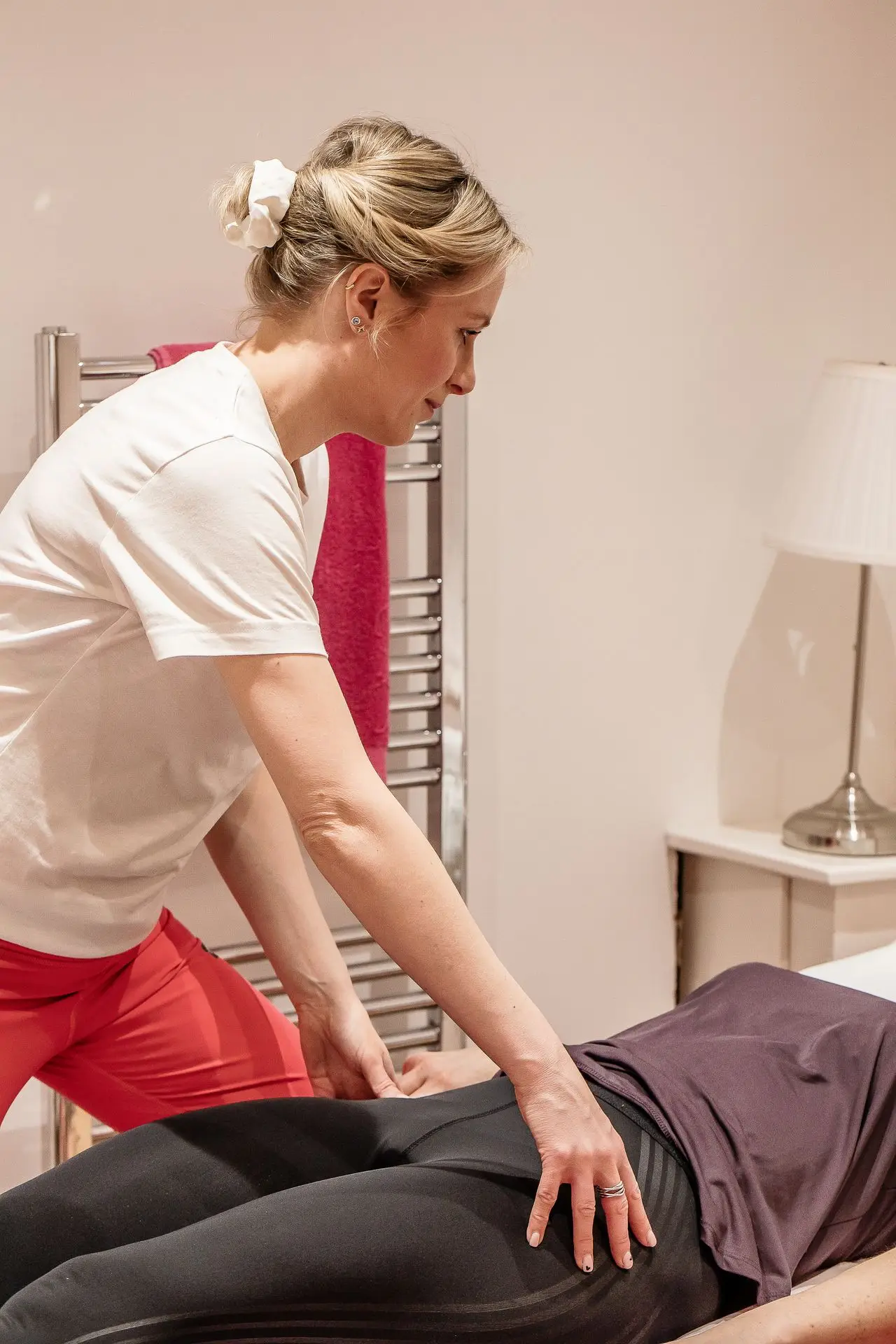
Consider specialist physiotherapy if you have persistent pain, difficulty managing exercise or daily tasks,
feel unhappy with your abdominal wall aesthetic, or have associated pelvic-floor symptoms.
A focal, painful or non-reducible bulge may be a hernia rather than uncomplicated diastasis and should be
assessed medically. Seek urgent care for severe pain, vomiting or a tender irreducible bulge.
Key references
2026 systematic review. Non operative management of postpartum Diastasis Recti. Hernia.
https://doi.org/10.1007/s10029-026-03671-1
2025 systematic review. Impact of postpartum exercise on pelvic floor disorders and diastasis recti abdominis. BJSM.
https://doi.org/10.1136/bjsports-2024-108619
NHS. Your post-pregnancy body. https://www.nhs.uk/baby/support-and-services/your-post-pregnancy-body/
Kent Community Health NHS Foundation Trust (2026). Diastasis rectus abdominus.
https://www.kentcht.nhs.uk/leaflet/diastasis-rectus-abdominus/