
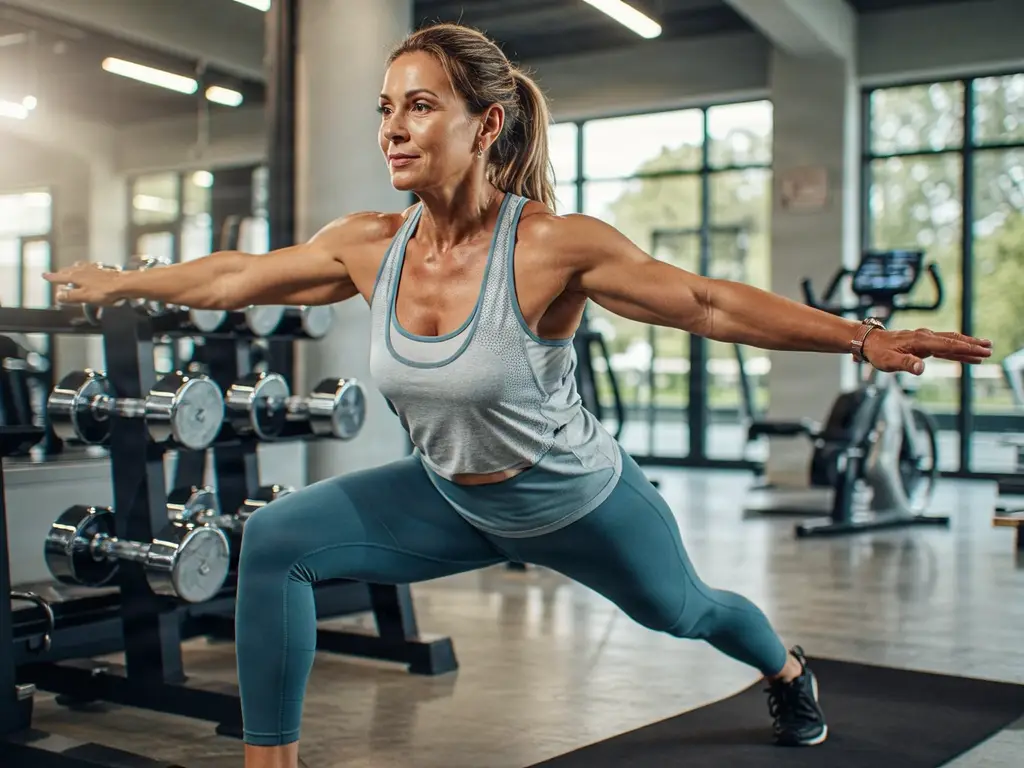
A prolapse diagnosis does not automatically mean giving up strength training.
If you have pelvic organ prolapse (POP), one of the first pieces of advice you may hear is to avoid heavy
lifting.
For someone who enjoys the gym, needs strength for work, lifts children or simply wants to stay strong
through midlife and beyond, that can feel like a major restriction.
The evidence is more nuanced than “lifting is bad for prolapse”.
Heavy occupational lifting has been associated with pelvic organ prolapse in some observational studies.
But recreational strength training is not the same exposure as repetitive manual work, and research in
women who lift weights for exercise has not shown a simple relationship in which heavier weights equal
more prolapse symptoms.
At present, there is not enough evidence to define a universally safe kilogram limit for women with
prolapse.
The practical question is therefore not simply, “How heavy is too heavy?” It is: “What can this
woman currently tolerate, how does her prolapse respond, and how can we progressively build her
capacity?”
Why has lifting traditionally been restricted?
Lifting increases intra-abdominal pressure. Because pelvic organ support sits at the base of the abdominal
cavity, it has been assumed that repeated high pressure must push the pelvic organs down and worsen
prolapse.
That hypothesis is biologically plausible, but pressure is not automatically damage.
Intra-abdominal pressure rises during many normal activities, including coughing, standing from a chair,
running, jumping and lifting. The pelvic floor and abdominal wall normally respond to these changing
demands.
The effect of a lift is likely to depend on far more than the number written on the weight. Technique, speed,
fatigue, breath strategy, body position, repetitions, training history, pelvic floor function, connective-tissue
support and the individual woman’s symptoms all potentially matter.
What does NICE actually say?
UK guidance reflects the uncertainty in the evidence.
NICE’s pelvic floor dysfunction guideline states that there is no evidence that unsupervised physical
activities such as walking or swimming improve or worsen pelvic floor symptoms. For women undertaking
supervised pelvic floor muscle training who want to remain active, NICE advises that supervised exercise
may help symptoms.
Importantly, the guideline committee reviewed interventions that included yoga, Pilates, weight training and
aerobic exercise, but could not determine which specific exercise types were responsible for benefit
because pelvic floor muscle training was usually included as part of the intervention.
NICE specifically identifies weight training as an area where more research is required. That is an
important distinction: lack of evidence is not evidence that women with prolapse must never lift weights.
What do studies of women who lift weights show?
One of the most useful studies surveyed 3,934 adult women who either did not lift weights or lifted light,
moderate or heavy weights for exercise.
Overall, 14.4% reported symptoms of prolapse, defined as a vaginal bulge sensation. Surprisingly, women
lifting the heaviest weights – more than 50 kg – did not have a higher prevalence of prolapse symptoms.
Women in the lightest lifting category were actually more likely to report symptoms than those lifting more
than 50 kg.
This study does not prove that heavy lifting protects the pelvic floor. It was cross-sectional, relied on
self-reported symptoms and cannot establish cause and effect. Women who already had troublesome
prolapse may also have deliberately reduced the weights they lifted, creating reverse causation.
What it does show is that the relationship between gym-based lifting and prolapse is not as simple as “the
heavier the weight, the greater the prolapse”.
But isn’t heavy lifting a risk factor for prolapse?
There is evidence linking physically demanding occupational work with prolapse.
A 10-year longitudinal analysis of 1,590 parous midlife women found that occupational lifting and/or
pushing was associated with new-onset symptomatic prolapse. Women reporting frequent occupational
lifting or pushing had approximately twice the adjusted risk compared with those who did not report this
exposure.
Other studies from populations where women repeatedly carry heavy loads for work and daily living have
also reported associations between heavy load carrying and prolapse.
However, occupational exposure can mean lifting or pushing repeatedly for many hours, often without
control over rest, technique, load selection or recovery. That is not equivalent to a structured strength
session performed two or three times a week.
We should therefore avoid taking occupational epidemiology and automatically using it to prohibit
recreational resistance training.
What does the broader exercise evidence tell us?
A 2023 narrative scoping review examined strenuous physical activity, exercise and pelvic organ prolapse.
The authors found that the literature was limited and heterogeneous. Some studies suggested that
strenuous exercise can produce temporary changes in vaginal support immediately after activity, and
occupational heavy work has been associated with prolapse. However, evidence about long-term
recreational exercise and the development or progression of POP remained sparse.
The review highlighted an important gap: we still do not have high-quality longitudinal trials showing
whether specific types, intensities or volumes of resistance training worsen, improve or have no effect on
prolapse over years.
That uncertainty should be communicated honestly rather than filled with arbitrary lifting restrictions.
Does a heavier weight always create more pelvic floor pressure?
Not necessarily in a simple linear way.
Intra-abdominal pressure varies substantially between people performing the same task. It is influenced by
the exercise itself, the load, body position, breathing, speed and effort.
A relatively light weight lifted repeatedly to fatigue may eventually feel more demanding than a controlled
heavier repetition. A heavy deadlift, a loaded carry and a high-repetition squat set are also very different
exposures.
This is one reason kilogram-based rules such as “never lift more than 10 kg” are difficult to justify for a
woman who is months or years beyond childbirth or surgery and has no specific medical restriction.
Should I breathe out when I lift?
Exhaling during the effort phase can be a useful strategy, particularly when someone notices heaviness,
breath-holding or excessive straining.
But it is not a universal rule that every woman with prolapse must exhale through every repetition forever.
As loads become heavier, trained lifters may naturally use some degree of breath-holding and trunk
bracing. We do not currently have evidence establishing one breathing strategy as the only safe approach
for prolapse.
In rehabilitation, I would usually explore different strategies and judge them by symptoms, control and the
demands of the task rather than imposing a single breathing rule.
What about ‘the knack’?
The knack is a deliberate pelvic floor contraction performed just before and during a predictable rise in
pressure, such as coughing.
A similar anticipatory contraction can sometimes help women who experience prolapse symptoms during a
lift. It can be a useful rehabilitation tool while coordination improves.
The goal, however, is not to grip the pelvic floor maximally throughout an entire gym session. The pelvic
floor needs to contract and relax, and different tasks require different levels of response.
How do I know whether an exercise is currently too much?
Symptoms are useful information.
During or after training, pay attention to a new or clearly increased vaginal bulge sensation, heaviness or
dragging that persists, difficulty emptying the bladder or bowel that is worse than usual, pelvic discomfort,
or symptoms that progressively increase across the session and do not settle afterwards.
A brief awareness of the prolapse does not automatically mean damage has occurred. Symptoms can
fluctuate through the day and with fatigue, constipation, hormonal factors and prolonged standing.
What matters is the pattern. If a particular load repeatedly produces significant symptoms that remain
elevated afterwards, modify the exercise and rebuild from a more tolerable level.
How can I modify strength training without stopping it?
Modification does not have to mean abandoning the exercise.
Options include reducing the load temporarily, reducing repetitions, increasing rest, shortening the range of
movement, changing the exercise position, using external support such as a bench or rack, changing the
tempo, or dividing one long session into smaller blocks.
For example, someone who becomes symptomatic after three sets of ten squats may tolerate four sets of
five at the same load because fatigue is lower. Another woman may tolerate a heavier hip thrust better than
a lighter high-repetition squat.
The best modification is the smallest change that allows useful training while keeping symptoms
manageable.
Can I progressively lift heavier?
For many women, yes.
Progression should be based on response rather than fear. If an exercise is performed with good control
and symptoms remain acceptable during the session and afterwards, the load or training volume can
gradually increase.
Only changing one variable at a time can make this easier to interpret. For example, increase load while
keeping repetitions similar, or increase repetitions before adding more weight.
This is the same principle used in musculoskeletal rehabilitation: capacity develops when tissues and
systems are exposed to an appropriate, progressive challenge.
Where does pelvic floor muscle training fit?
Pelvic floor muscle training has considerably stronger evidence for symptomatic prolapse than avoiding
resistance exercise.
The large POPPY randomised controlled trial found that individualised pelvic floor muscle training reduced
prolapse symptoms compared with lifestyle advice alone. NICE recommends considering at least four
months of supervised pelvic floor muscle training for appropriate symptomatic prolapse.
For a woman who wants to lift, rehabilitation should eventually connect pelvic floor training with the actual
task: squatting, hinging, pushing, pulling, carrying and managing fatigue.
Ten perfect pelvic floor contractions lying down are useful only if the programme ultimately helps the
person function in the life she wants to live.
Would a pessary help me lift?
For some women, a vaginal pessary can be very useful during exercise.
A pessary supports the vaginal walls or uterus mechanically and can reduce bulge or heaviness
symptoms. Some women use one every day; others use a removable pessary specifically for running, gym
sessions or longer periods on their feet.
Using a pessary is not evidence that your pelvic floor has failed, and it does not prevent you from doing
pelvic floor rehabilitation. The two approaches can work together.
What if I have a stage 3 or 4 prolapse?
A more advanced prolapse does not automatically prohibit strength training, but symptoms and individual
anatomy become particularly important.
Some women with a larger prolapse exercise comfortably with a pessary and rehabilitation. Others remain
significantly symptomatic and choose to modify activity while considering surgical options.
There is very little research that allows us to prescribe exact resistance-training thresholds according to
POP-Q stage. An individual assessment is therefore more useful than applying the same restriction to
everyone with a stage 3 or 4 prolapse.
What about lifting after prolapse surgery?
Postoperative rehabilitation is different from exercising with a non-operated prolapse.
Immediately after surgery, tissues are healing and surgeon-specific restrictions should be followed. The
traditional advice to avoid heavier lifting for a set number of weeks is increasingly being examined, but
evidence for the optimal postoperative loading progression remains limited.
Once healing milestones have been reached and the surgical team is happy with recovery, strength can be
rebuilt progressively. Permanent avoidance of meaningful resistance exercise should not be assumed
unless there is a specific clinical reason.
A critical look at the evidence
This is an area where it is especially important not to overstate what research can tell us.
The study of almost 4,000 recreational weightlifters is large and directly relevant to women who lift for
exercise, but its cross-sectional design cannot determine whether lifting caused, prevented or had no effect
on prolapse. Self-selection is a major limitation: women with symptoms may choose lighter training.
The 10-year SWAN analysis provides stronger temporal evidence that occupational lifting and pushing may
contribute to symptomatic POP in parous women. However, occupational exposure was self-reported and
does not tell us whether a controlled gym programme produces the same risk.
The 2023 scoping review is useful for mapping the literature but, by design, does not provide the pooled
causal estimate that a high-quality systematic review of homogeneous trials might provide. The underlying
studies vary widely in population, exercise exposure and prolapse measurement.
NICE therefore reaches a cautious conclusion: physical activity has broad health benefits, but the specific
effect of weight training on pelvic floor dysfunction remains uncertain and warrants further research.
What the evidence cannot currently justify is a universal maximum lifting weight for every woman with
prolapse.
My clinical perspective
I do not think a woman should be handed a prolapse diagnosis and a lifetime ban on heavy things.
Strength matters. It matters for bone health, muscle mass, metabolic health, independence, sport, work
and the practical realities of carrying children, shopping and luggage.
If lifting produces significant prolapse symptoms, I want to understand why and modify it. I may assess
pelvic floor strength and relaxation, lifting strategy, fatigue, bowel function and overall training load. We
might change the exercise, reduce volume, build capacity, add pelvic floor rehabilitation or trial a pessary.
The aim is not to prove that everyone with prolapse should lift as heavily as possible.
It is to replace fear-based restriction with informed, individualised progression.
Key Takeaways
- A pelvic organ prolapse diagnosis does not automatically mean you must stop lifting weights.
- Heavy occupational lifting has been associated with prolapse, but this is not the same exposure as
structured recreational strength training. - A large survey of women who lifted weights for exercise did not find more prolapse symptoms in the
heaviest lifting group. - There is currently no evidence-based universal kilogram limit for women with prolapse.
- Intra-abdominal pressure is a normal part of movement and does not equal tissue damage.
- Symptoms during and after training can help guide exercise modification and progression.
- Pelvic floor muscle training has good evidence for improving prolapse symptoms and can be integrated
with functional strength work. - A pessary can be a useful additional option for women who are symptomatic during exercise.
- The research is still evolving, so confident claims that heavy gym lifting either causes or is completely
irrelevant to prolapse go beyond the evidence. - The goal is progressive, symptom-informed strength rather than unnecessary lifelong restriction.
Key References
- NICE. Pelvic floor dysfunction: prevention and non-surgical management (NG210). Recommendations and evidence review on physical activity.
- Forner LB, Beckman EM, Smith MD. Symptoms of pelvic organ prolapse in women who lift heavy weights for exercise: a cross-sectional survey. Int Urogynecol J. 2020;31(8):1551-1558.
- Carter Ramirez A, Scime NV, Brennand EA. Development of symptomatic pelvic organ prolapse over 10 years of mid-life follow-up is affected by occupational lifting and/or pushing for parous women. Maturitas.2022;164:9-14.
- Bø K, Nygaard IE. Strenuous physical activity, exercise, and pelvic organ prolapse: a narrative scoping review. Int Urogynecol J. 2023.
- Hagen S, Stark D, Glazener C, et al. Individualised pelvic floor muscle training in women with pelvic organ prolapse (POPPY): a multicentre randomised controlled trial. Lancet. 2014;383(9919):796-806.
- Cong Z, Wang Z, Sun J, et al. Pelvic floor muscle training for pelvic organ prolapse: a systematic review and meta-analysis of randomised controlled trials. BMC Urol. 2026.
Want support with lifting weights and prolapse? Book a Pelvic Power Hour at Well Woman Physio for an assessment and a plan tailored to your symptoms and exercise goals.