

When Neck Problems Affect More Than Your Neck
Many people expect neck conditions to cause neck pain, stiffness, or arm symptoms.
However, sometimes age-related changes in the cervical spine can place pressure on the spinal cord itself, leading to a condition called:
Degenerative Cervical Myelopathy (DCM)
DCM is recognised as the most common cause of spinal cord dysfunction in adults worldwide, and is increasingly highlighted in international spinal research and education, including work from organisations such as Myelopathy.org and AO Spine.
Early recognition matters because symptoms often develop gradually and can be mistaken for:
- normal ageing
- menopause-related changes
- reduced balance or coordination
- arthritis
- general deconditioning
- or even peripheral musculoskeletal issues
🧠 What Is Degenerative Cervical Myelopathy?
The spinal cord runs through the cervical spine and acts as the body’s central communication pathway between brain and limbs.
In DCM, age-related degenerative changes reduce the space available for the spinal cord.
Common contributing changes include:
- Disc degeneration
- Bone spur formation (osteophytes)
- Thickening of spinal ligaments
- Arthritic changes in the cervical spine
Over time, this can lead to progressive spinal cord dysfunction.
⚠️ What Symptoms Can Cervical Myelopathy Cause?
Symptoms vary widely, which is one reason the condition is often missed.
They are typically neurological and often affect multiple areas of the body.
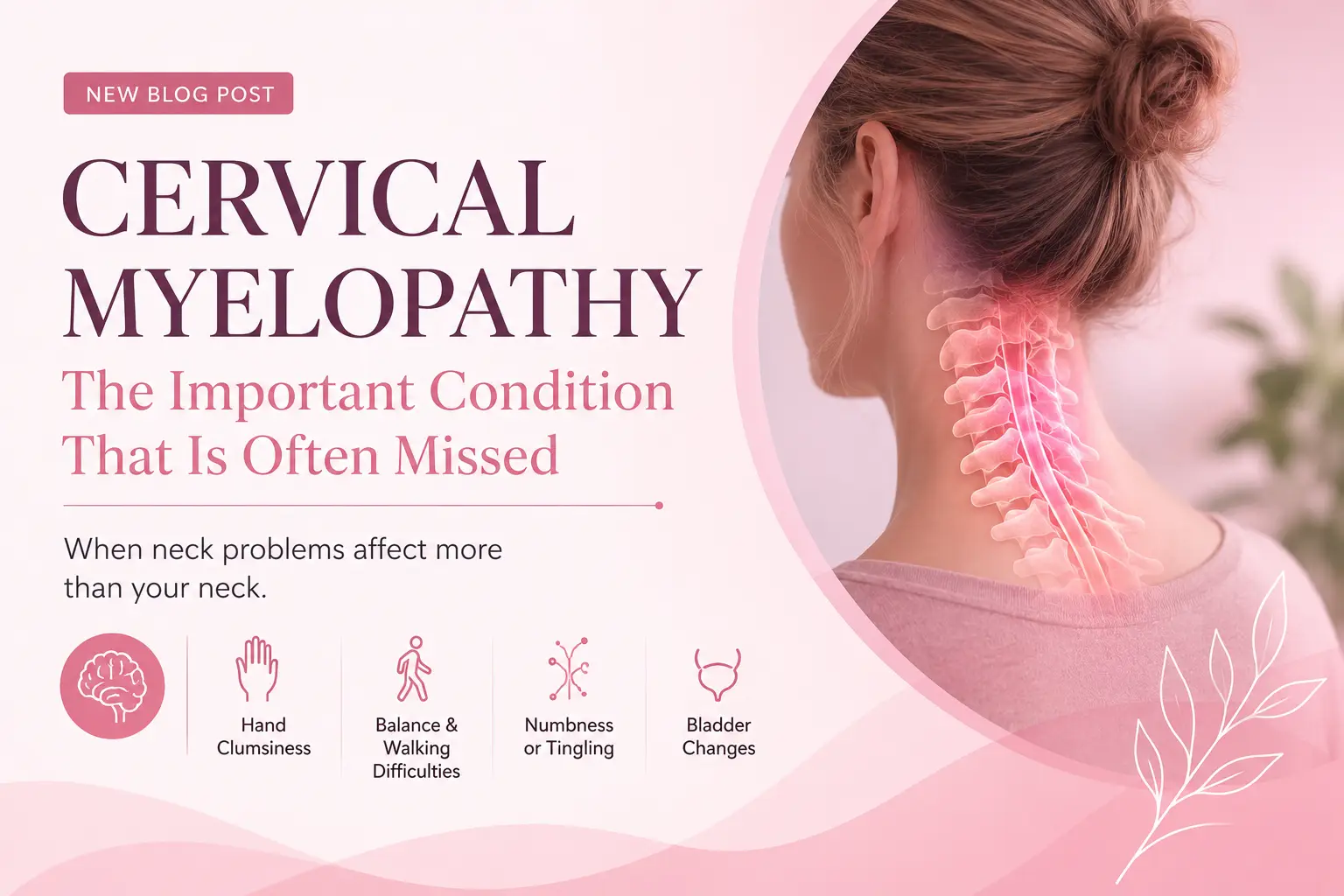
✋ Hand Function Changes (Very Common Early Feature)
People often report:
- Dropping objects
- Difficulty with buttons or fine motor tasks
- Changes in handwriting
- Reduced dexterity
- Difficulty opening jars or handling small objects
👉 If you want to understand hand symptoms in more detail, see:
→ Why Am I Dropping Things? (Hand Clumsiness Explained)
🦵 Balance and Walking Difficulties
Common features include:
- Feeling unsteady when walking
- Difficulty walking in the dark
- Frequent trips or stumbles
- Reduced confidence on uneven ground
- A sensation of “heavy legs”
👉 These symptoms can overlap with other conditions — see:
→ Is It Menopause, Ageing, or Something Else? Understanding Balance Problems
🧠 Sensory and Coordination Changes
May include:
- Tingling or numbness in hands or arms
- Altered sensation in limbs
- Electric shock-type sensations
- Loss of coordination
🚻 Bladder Changes (Important but Less Common Early Sign)
Some people experience:
- Increased urinary urgency
- Difficulty fully emptying the bladder
- New bladder dysfunction without other clear cause
❗ Why Cervical Myelopathy Is Often Missed
DCM typically develops slowly.
Because symptoms are subtle at first, they are often attributed to:
- Ageing
- Stress or fatigue
- Menopause-related changes
- Musculoskeletal pain
- General loss of fitness or balance
Research and clinical consensus from spinal experts including Mark Kotter, Michael Fehlings, Lindsay Tetreault, and Aria Nouri highlight that diagnostic delay is common and can significantly impact outcomes.
🧭 Why Early Recognition Matters
Unlike many musculoskeletal conditions, DCM involves spinal cord compression, not just nerve irritation.
This means:
- Symptoms may progress over time
- Some people remain stable, but many experience gradual deterioration
- Early identification can improve management options
International research groups such as AO Spine and clinical initiatives such as RECODE-DCM have strongly emphasised improving early recognition and referral pathways.
🩺 What Should You Do If You Recognise These Symptoms?
If you notice:
- Increasing clumsiness in your hands
- Progressive balance or walking difficulty
- Unexplained loss of coordination
- Multiple neurological symptoms affecting arms and legs
- Symptoms that are gradually worsening
you should seek assessment from a healthcare professional.
A detailed neurological examination can help determine whether further investigation or referral is required.
👉 This should be considered within UK spinal pathways such as the National Back Pain and Radicular Pain Pathway, which support early identification of potential neurological compromise.
🧠 What Does Treatment Involve?
Management depends on severity and progression.
Options may include:
👀 Monitoring
For mild or stable cases, careful observation and regular reassessment may be appropriate.
🏥 Specialist referral
Some people may be referred to spinal specialists for further investigation, including MRI imaging.
🔧 Surgical intervention
If indicated, surgery aims to:
- relieve spinal cord compression
- prevent further deterioration
- preserve neurological function
🧑⚕️ Physiotherapy role
Physiotherapy may support:
- balance and gait training
- strength and conditioning
- functional independence
- confidence with movement
- fall prevention strategies
Cervical Myelopathy vs Other Conditions
A key clinical challenge is distinguishing DCM from other conditions such as:
- Peripheral nerve entrapment
- Stroke or neurological disease
- Arthritis
- Menopause-related balance changes
- General deconditioning
Other related reading:
- → Why Am I Dropping Things?
- → Can Neck Problems Affect Your Legs?
- → Is It Menopause, Ageing, or Something Else?
The Bottom Line
Degenerative Cervical Myelopathy is:
- common
- often under-recognised
- potentially progressive
- and clinically important to identify early
If you notice changes in hand function, balance, walking, or coordination, it is important to seek professional assessment.
Early recognition can make a meaningful difference in management and outcomes.