

FAQ 1: Can menopause cause plantar fasciitis?
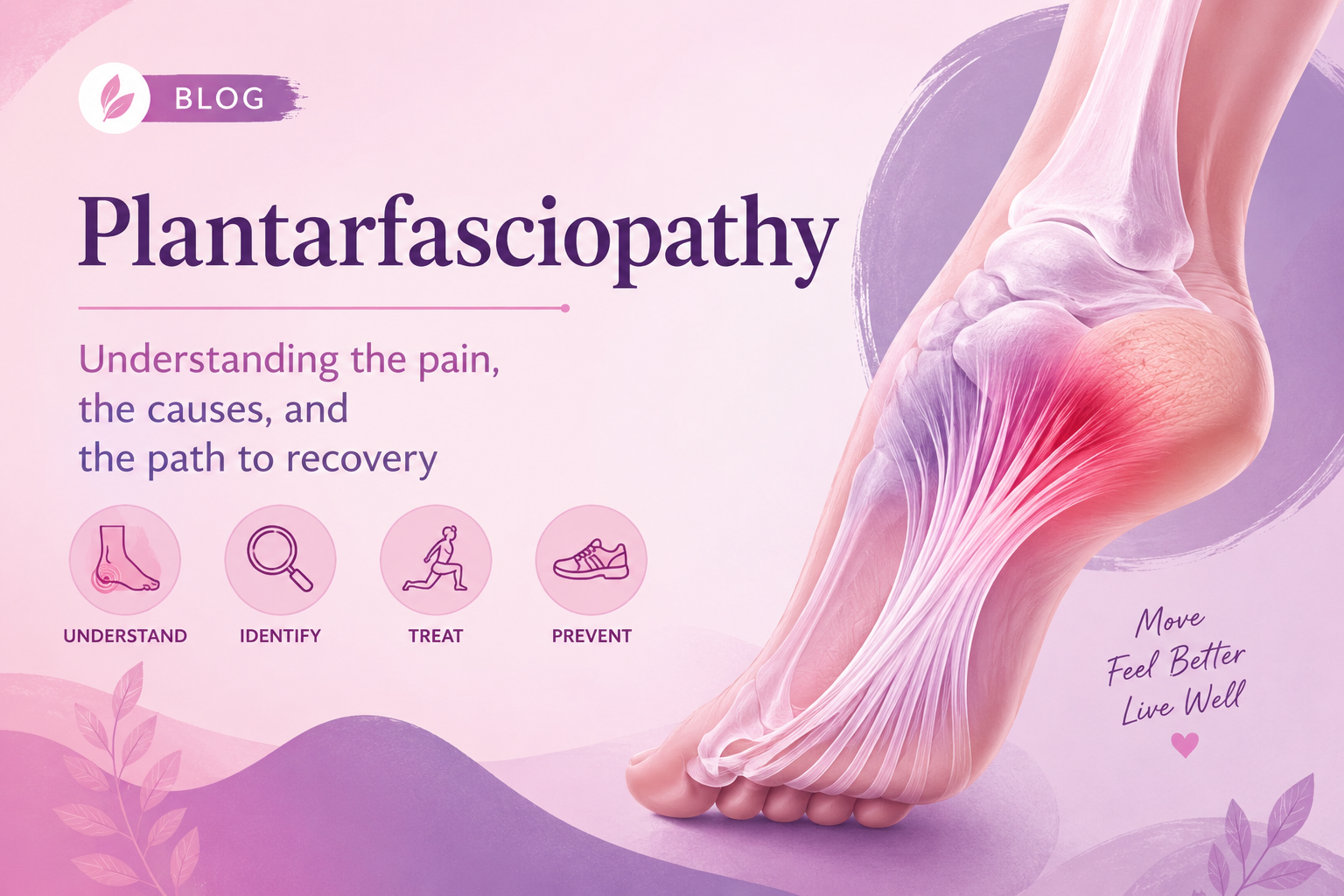
Menopause does not directly “cause” plantar fasciopathy, but the transition may influence factors that contribute to it.
Declining oestrogen may affect connective tissue properties such as collagen turnover and recovery capacity, which can influence how well the plantar fascia tolerates daily load. Combined with normal walking and standing demands, this may increase symptom sensitivity in midlife.
Learn more about menopause and tendon issues here
However, plantar fasciopathy is still primarily a load-related condition, meaning symptoms are driven by load exceeding current tissue capacity rather than hormonal change alone.
FAQ 2: Why is plantar fasciopathy worse in the morning?
Morning pain is very common in plantar fasciopathy.
During rest (such as overnight), the plantar fascia is unloaded and stiffens slightly. The first steps in the morning place a sudden load through this sensitised tissue, which can cause sharp heel pain.
Symptoms often ease after a few minutes of walking as the tissue warms up, but may return later in the day if cumulative load exceeds capacity.
FAQ 3: How long does plantar fasciopathy take to recover?
Recovery timelines vary, but most cases improve over 8–12 weeks with consistent loading-based rehabilitation, while more persistent or long-standing cases may take several months.
Key factors influencing recovery include:
- symptom duration before treatment
- load management consistency
- strength and calf capacity
- footwear and daily activity demands
The most important factor is not complete rest, but progressive, well-dosed loading over time.
FAQ 4: Should I stop walking if I have heel pain?
In most cases, no.
Current evidence supports load modification rather than complete rest. This means adjusting walking volume or intensity to stay within a tolerable symptom range rather than stopping activity altogether.
Complete rest can reduce tissue capacity further, whereas gradual, consistent loading helps the plantar fascia adapt and recover over time.
FAQ 5: What is the best treatment for plantar fasciopathy?
The strongest evidence supports:
- progressive loading exercises (calf + plantar fascia-specific work)
- load management strategies
- education about symptom response and recovery
- gradual return to full activity
Passive treatments alone (such as rest or modalities without loading) are not considered effective long-term solutions.
FAQ 6: Does shockwave therapy help plantar fasciitis?
Extracorporeal shockwave therapy (ESWT) may help reduce pain in some people with chronic plantar fasciopathy, particularly when symptoms have persisted for several months.
However, it is generally considered an adjunct treatment, not a replacement for progressive loading rehabilitation, which remains the cornerstone of recovery.