

Introduction
Many people notice they are dropping objects more often, struggling with buttons, or finding their handwriting changing.
This can be frustrating and worrying, and it is often assumed to be due to ageing, arthritis, or reduced hand strength.
However, one possible cause that is frequently overlooked is changes in the cervical spine affecting the spinal cord, known as Degenerative Cervical Myelopathy (DCM).
✋ What Does “Dropping Things” Actually Mean?
People often describe:
- Dropping phones or cups unexpectedly
- Difficulty fastening buttons or zips
- Poor handwriting or loss of control
- Feeling “clumsy” with fine hand tasks
- Reduced grip precision rather than just weakness
This is important: DCM is often more about loss of coordination (dexterity) than pure strength loss.
🧠 When Might It Be More Than Just Hand Fatigue?
Hand clumsiness becomes more clinically significant when it is:
- Gradually worsening
- Affecting both hands (or spreading)
- Combined with balance or walking changes
- Associated with numbness or tingling
- Not explained by local hand injury or arthritis
⚠️ Possible Neurological Cause: Cervical Myelopathy
In DCM, the spinal cord in the neck becomes compressed.
This can disrupt the signals between the brain and hands, leading to:
- Reduced fine motor control
- Slower hand movements
- Poor coordination
- Difficulty with precision tasks
👉 Learn more:
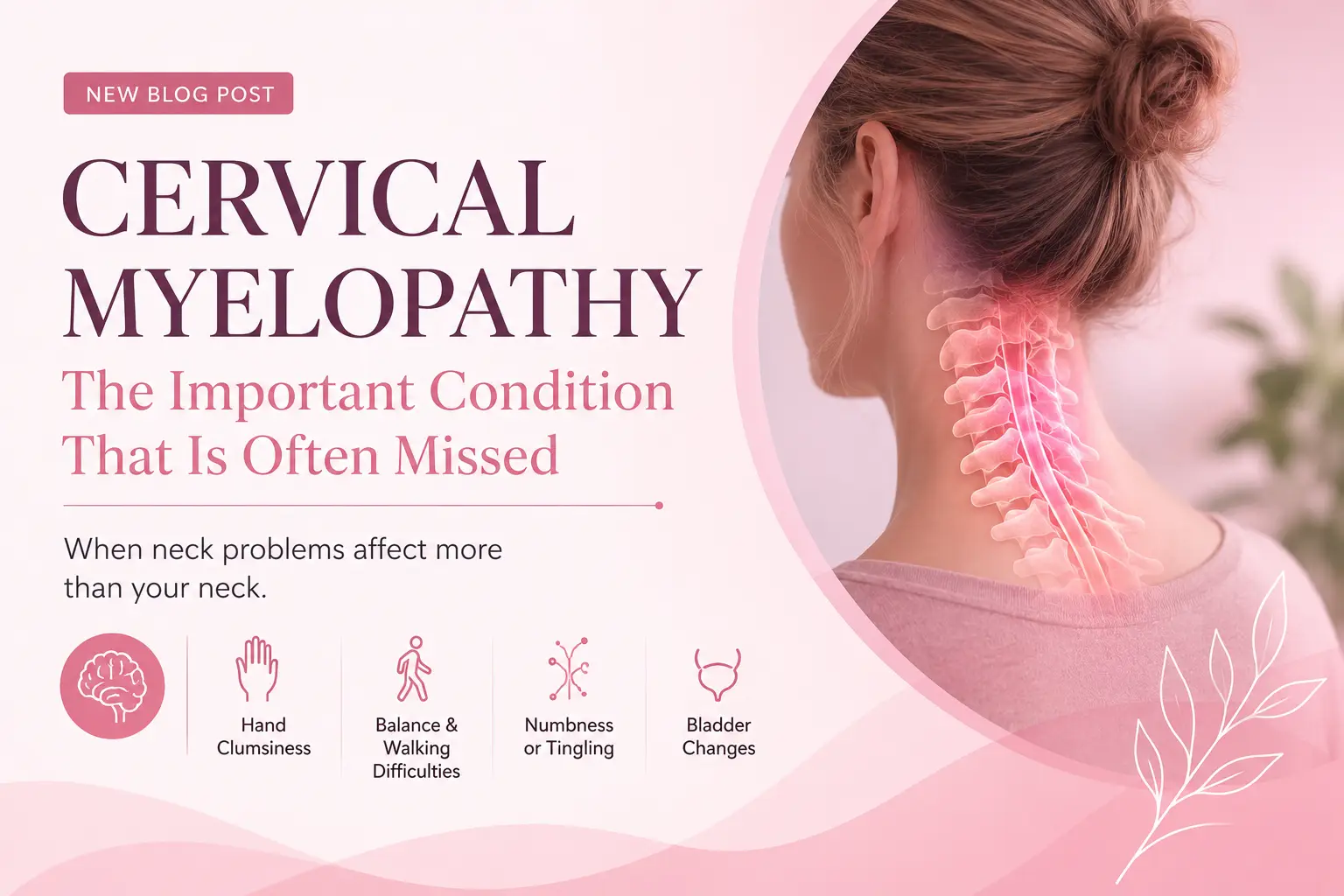
→ Cervical Myelopathy: The Important Condition That Is Often Missed
Other Common Causes (Important Differential)
Not all hand clumsiness is neurological.
More common causes include:
- Carpal tunnel syndrome
- Thumb or finger arthritis
- Tendon irritation
- General deconditioning
- Postural overload from repetitive work
🧭 When Should You Seek Assessment?
You should consider clinical assessment if you notice:
- Progressive worsening of hand function
- Hand clumsiness + balance changes
- Difficulty walking or frequent tripping
- Numbness or altered sensation in hands/arms
- Symptoms affecting daily independence
🔑 Key Message
Dropping things is common — but when it is progressive and combined with other neurological symptoms, it may need further assessment to rule out cervical spinal cord involvement.