


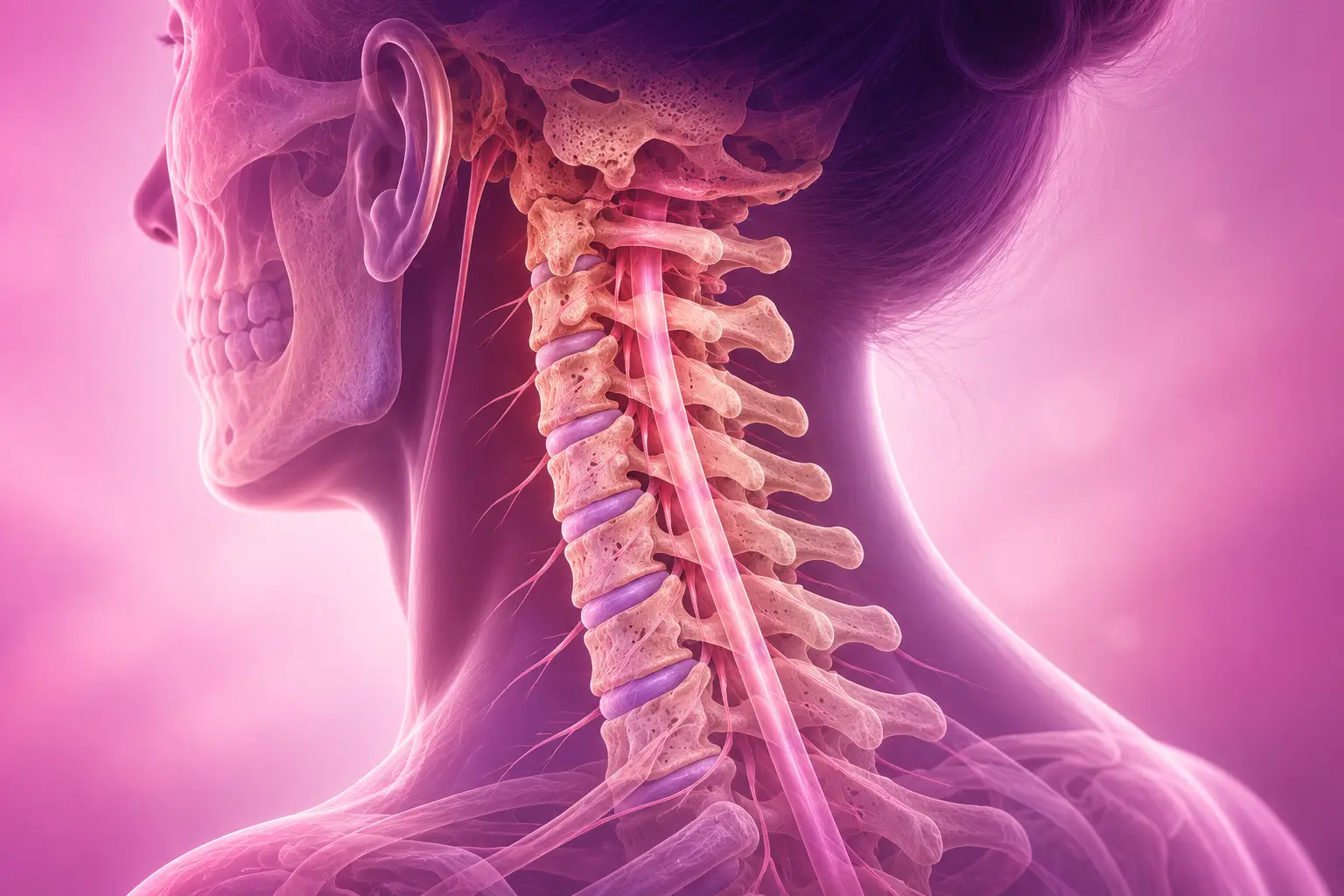
It surprises many people to learn that neck problems can affect the legs.
This happens because the spinal cord carries signals to both arms and legs, not just the neck and shoulders.
When the spinal cord is affected, symptoms can appear anywhere below the level of the neck.
 How the Neck Can Affect the Legs
The spinal cord is like a communication cable between the brain and the rest of the body.
If that cable becomes compressed in the neck, it can lead to:
-
- Balance problems
-
- Difficulty walking
-
- Changes in coordination
-
- Weakness or heaviness in the legs
This is typical of Degenerative Cervical Myelopathy (DCM).
 Common Leg Symptoms in DCM
People may describe:
-
- Legs feeling “heavy” or stiff
-
- Reduced confidence when walking
-
- Frequent tripping or stumbling
-
- Feeling unsteady on uneven ground
 How This Differs From Sciatica
This is an important clinical distinction:
Sciatica (lumbar nerve root issue)
-
- Usually one leg
-
- Pain follows a nerve pattern
-
- Often sharp or burning pain
-
- May include back pain
Cervical myelopathy
-
- Often affects both legs or balance
-
- More coordination and gait-related
-
- Less “shooting pain”
-
- May occur with hand symptoms
 Related reading:
→ Sciatica: What It Is and What Causes It
 Why This Is Often Missed
Leg symptoms are often attributed to:
-
- Ageing
-
- Arthritis
-
- Deconditioning
-
- Inner ear balance issues
But when combined with hand changes or clumsiness, clinicians may consider cervical spinal cord involvement.
 Key Message
If leg symptoms occur alongside hand changes or balance issues, the neck may be part of the picture — even if there is no neck pain.